Showing posts with label Terry Funk. Show all posts

Tuesday, April 04, 2023

Major Leaguer: Terry Funk Insists "It's My Moment!"


"I am a major leaguer. 
I am just like Nolan Ryan; 42 and tryin' 
to teach you people what a true hero is today. "


by Dick Bourne
Mid-Atlantic Gateway

We usually don't stray much past 1988 on this website, but this is one of my favorite Terry Funk interviews ever during his 1989 run in the early days of Ted Turner's WCW.

During the spring of 1989, Funk had some very memorable interviews and TV matches setting him up as the wild and unpredictable challenger to NWA World champion Ric Flair. WCW had initiated the "Top 10" concept and Terry hadn't made into the top 10 yet and was very frustrated by that fact. This was in the weeks following his "pearl harbor" attack on Ric Flair in Nashville.

Frustrating Funk further was the fact that Lance Russell interrupted him to go to the ring for the "Rookie Challenge" where two young competitors would have a shot at "their moment" on national television.

But a protesting Funk insisted it was HIS moment, and he made sure he stole that moment from rookies Lee Scott and Dwayne Bruce. Mayhem ensues.

My favorite visual is near the end of this video when Funk piledrives Lee Scott and you see Funk between Scott's extended legs with a big grin on his face screaming "It's my moment!"

Sidebar: Funk evoked the name of Nolan Ryan in this interview, a reference to the Major League Baseball Hall of Famer who in this same year of 1989 for the Texas Rangers would lead the American League in strikeouts with an incredible .615 winning percentage and would be voted to the All-Star game that year - - amazingly all at the age of 42. The same age as Funk.

The clip is from an episode of "NWA Pro Wrestling" taped at the Center Stage Theater in Atlanta (also regular home to "World Championship Wrestling" on WTBS.) Commentary is by my favorite 1989 broadcast team of Lance Russell and Bob Caudle.


Originally posted April 2018 on the Mid-Atlantic Gateway

http://horsemen.midatlanticgateway.com

Friday, February 03, 2023

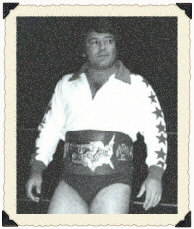
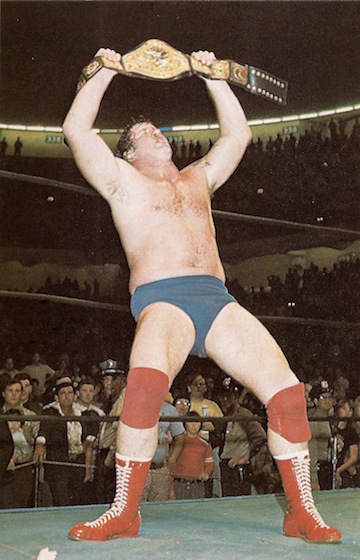
U.S. Champion Terry Funk

Edited from Original NWA Promotional Photograph
 

If you are looking at this photograph and thinking to yourself, "Wow, I've never seen a photo of Funk with the old Crockett U.S. title belt," well - - you still haven't.

You see, even to this day as of this writing, there has never been a legitimate photo to surface of Terry Funk wearing the Crockett/Mid-Atlantic Wrestling version of the U.S. title belt. The night he won the championship in a tournament in Greensboro in 1975, the actual belt wasn't present and they used a stand-in (a WWWF tag belt of all things.) Funk then only wore the original belt to the ring one time, in his first defense on Thanksgiving night against Paul Jones, the man he beat in the finals of the aforementioned tournament. While there certainly had to have been a photo taken by the wrestling media that night, one has never surfaced, and believe me  - - we have searched long and hard. One may show up one day.

The above photo is a well done photoshopped image originally from a mid-1970s promotional photograph when Terry Funk was NWA World Heavyweight Champion. In the original, Terry is wearing the "domed-globe" NWA title belt. Longtime Mid-Atlantic Wrestling fan Steven Chandler (aka Jesse Santana in his wrestling persona) did a great job in modifying the photo to have Terry wearing the Crockett version of the U.S. title belt from that same era. It gives us all a great idea of what Terry would have looked like wearing that classic cast U.S. title belt.

Funk briefly held that U.S. title in November 1975, in the weeks leading up to his historic win over Jack Brisco for the NWA World title in Miami Beach, FL in December 1975. It was all part of classic booking from that era to simultaneously build Funk up as top world title contender as well as establish Paul Jones as U.S. champion and the #1 contender for Funk's world title when he would later win it. 

You can read more about the famous tournament Funk won in Greensboro to win the U.S. title, as well as the aftermath that Thanksgiving, in our feature on its 40th Anniversary published back in 2015. You can also read about my brief interaction with Funk at the NWA Wrestling Legends Fanfest in Charlotte in 2010 where he posed for a photo with a cast replica of the U.S. belt. 

Friday, December 16, 2022

Funk vs. Wahoo: History Had Other Plans

By Brack Beasley
Mid-Atlantic Gateway Contributor

At first glance I figured this poster to be from 1976 but upon researching the date, found it to be Valentines Day, 1977. 

It promotes an NWA World Title match at the Sampson County Middle School gym in Clinton, NC with Terry Funk defending against Chief Wahoo McDaniel. Unfortunately for Funk, he lost the championship to Harley Race in Toronto only 8 days prior, so this scheduled defense by Funk never transpired.

The question is, did Race defend the NWA World Title in Clinton? One would have to assume so as he probably took over Funk's bookings upon winning the belt. In addition, Race defended the belt against Wahoo in Charlotte on the 13th and Columbia, SC on the 15th.

Other familiar Mid Atlantic names on the card included Tiger Conway Jr., Crusher Blackwell, Sgt. Jacques Goulet, Johnny Eagle, and young Macho Man Randy Poffo.

The poster itself has a vertical layout with all black print over a two tone background and great images of Funk and Wahoo with their names in big bold letters. 

NO. 43 IN THE BEASLEY POSTER SERIES

* * * * * * * * 

Mid-Atlantic Gateway Notes
by Dick Bourne

Always interesting to see future world champions working the opening matches on cards in their early careers. In this case Tatsumi Fujinami, billed here as Dr. Fujiani (and occasionally Dr. Fujinami) would later become IWGP and NWA World Champion. The second match of the night featured pre-macho Randy Poffo who would later win the WWF World Title as Randy "Macho Man" Savage.

Wahoo McDaniel was reigning Mid-Atlantic Heavyweight Champion when he presumably wrestled the world champion in Clinton. It was also around this time that Wahoo was presented with a brand new Mid-Atlantic belt, the familiar white-faced title belt most associated with the championship, and would be worn by many future hall-of-famers between 1977 and 1985.

Tuesday, May 10, 2022

Magazine Memories: The SuperStar Grapevine (1977)


The SuperStar Grapevine column in "Wrestling Superstars" was always one of our favorite sections of that newsstand magazine.

And of course we believed every word of it. Who were we to question the journalistic standards of Stanley Weston and his fine group of editors?

So hear are a few classic entries worth hanging onto that appeared in that literary tome in late 1977. The titles are ours.


Nobody Does it Better
Ric Flair claims the song "Nobody Does It Better" was not inspired by James Bond, but by him. "The songwriter, Carol Sager, obviously has seen me wrestle. Who can blame the woman for becoming overcome by my brilliance?" Don't you wish you had Flair's imagination?

Move Over Mother Teresa
Wahoo McDaniel doesn't want any publicity for his many charitable works, but someone should publicly congratulate him. Wahoo is a tireless worker for the downtrodden and helpless. We're lucky to have Wahoo living in our world.

A Dish Best Served Cold
Terry Funk, back on the road to success, declares, "Harley Race cheated when he took my title. That doesn't bother me anymore. I don't want revenge. I just want to break him in two for the fun of hearing him scream."

Two Legs A Week
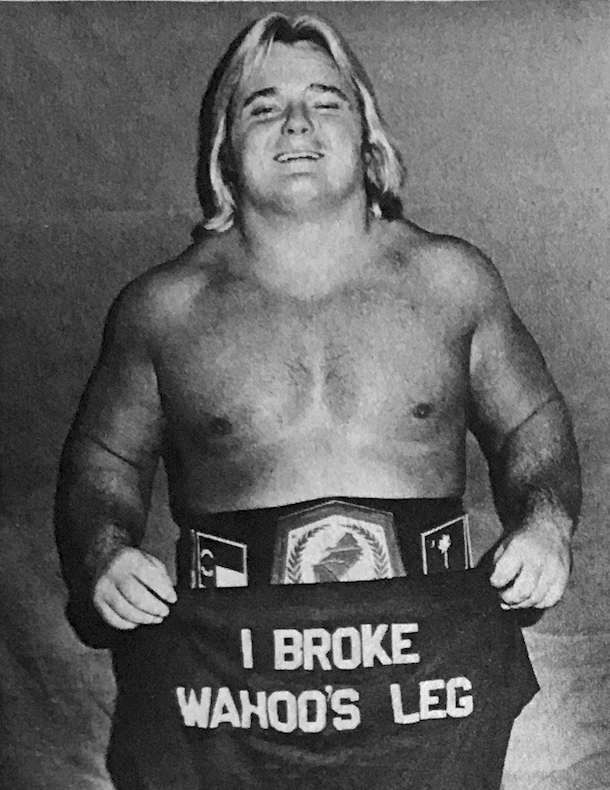
Feeling no remorse whatsoever for breaking Wahoo McDaniel's leg, Greg Valentine has gone on to break the leg of young rookie "Irish" Pat McKillan. "I hope to break at least two legs a week," says Valentine. "Maybe four, if I get lucky."

Originally published in May 2018 on the Mid-Atlantic Gateway.

http://bookstore.midatlanticgateway.com

Friday, April 15, 2022

Magazine Memories: Paul Jones vs. Terry Funk


by Dick Bourne
Mid-Atlantic Gateway

This was always one of my favorite photos in the old Weston magazines, it ran in many issues over the years in stories or mentions about Paul Jones and/or Terry Funk.

What I like is the way Funk is selling. It was a familiar look for him when selling during the 70s and early 80s.

Jones is working over Funk's leg, perhaps setting him up for his trademark Indian deathlock. Funk has his arms wrapped around his head - - his right over his eyes, his left over his ear. I used to joke this was the "see no evil" method of selling. If I can't see you and and I can't hear you, then you can't hurt me.

One of the best matches on tape to see Funk sell in this way is the famous Toronto match in 1977 where he loses the NWA title to Harley Race.

It's a small thing, really, but it always stood out to me, and it did in this great photo as well.


Originally published May 2018 on the Mid-Atlantic Gateway. Republished 5/30/2020, 4/14/2022.


http://www.midatlanticgateway.com/p/us-title-book.html

Sunday, February 06, 2022

Florida's Role in the Race/Funk NWA Title Change in Toronto

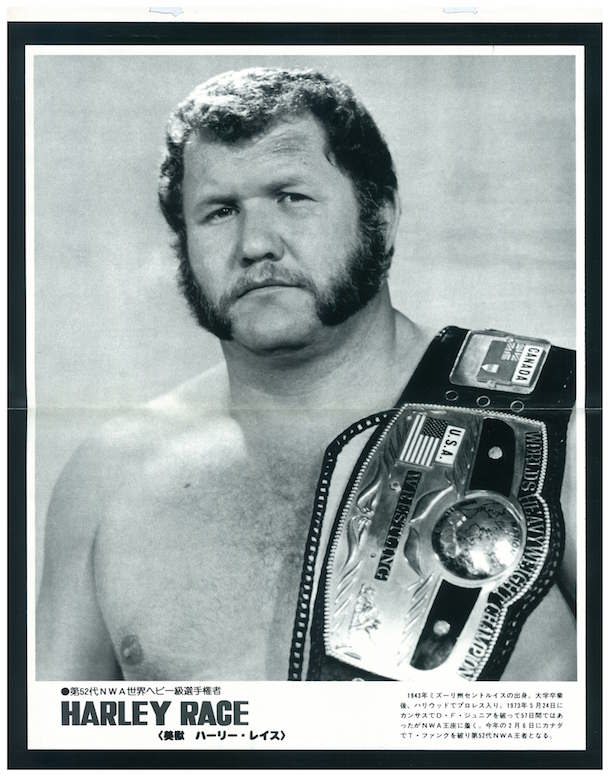
Today (February 6) marks the anniversary of Harley Race's historic NWA title win over Terry Funk in Toronto, Canada, that took place on February 6, 1977. It was Race's second NWA title win, with six more to come over the next seven years.

Forgotten by many is the key role Championship Wrestling from Florida played in the key events that led up to title change in Toronto.

The following is an article about all of that magic originally published on The Domed Globe website and republished on the Mid-Atlantic Gateway in May of 2021.


by Dick Bourne
Mid-Atlantic Gateway

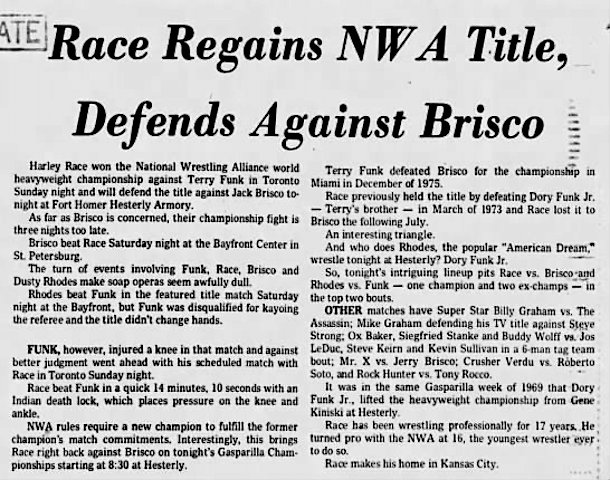
We're always appreciative of newspapers that do a good job of presenting wrestling in a journalistic fashion. This is a particularly good article in the Tampa Tribune promoting an upcoming card for Championship Wrestling from Florida on February 8, 1977, just two nights after Harley Race defeated Terry Funk with an Indian deathlock to win the NWA World Heavyweight Championship. 

Who knows who wrote the piece. It doesn't really sound like it came from the office, but it sounds way too informed to be written by the a staff sports writer either.

The article captures all the complete twists and turns in the wonderful story leading up to this night at the fabled Fort Homer Hesterly Armory. There were actually two separate stories being told.

The first story cemented former champion Jack Brisco as Florida's top contender for the NWA title. Many of the fans coming to the Hesterly Armory that Tuesday night had witnessed Brisco cleanly beat Harley Race, also a former champion, that past Saturday in St. Petersburg. Surely Brisco could beat Race again, this time with his newly won NWA World championship at stake in Tampa.

The second story told answered a question many might have had following the finish to the title change match in Toronto. As a teenage fan watching wrestling in 1977, when the film of the match from Toronto was shown on Mid-Atlantic television, it seemed strange to me that Race had won by submission with an Indian deathlock. I had only ever seen our local hero Paul Jones win with that hold. In the wrestling magazines, it seemed the reports usually suggested Race typically won with various suplexes or his infamous flying headbutt from the top turnbuckle, resulting in wins by three-count pinfall. Why had Race instead gone for the submission for the win against Funk in Toronto? 

The answer, it turned out, played out the night before in Florida.

The main event of the card in St. Petersburg on Saturday night was Terry Funk defending the NWA title against Dusty Rhodes. As the article above reports, Funk injured his knee in the match against Rhodes, and "against his better judgement" went ahead with the scheduled title defense against Race the next night in Toronto.

The rest, as they say, is history. Race knew what most fans didn't about the night before in the St, Petertsburg Bayfront Arena. Funk was hurt, and Race took advantage. He defeated Funk in 14:10 with an Indian death-lock to capture the gold belt. (I can still hear ring announcer Norm Kimber make the famous call.) It was a hold Race used infrequently (if ever?) and seemed almost out of place as it happened that night in Maple Leaf Gardens.

As the author of the article pointed out. Brisco's victory over Race in St. Petersburg came three days too early. Race got the better of him in Tampa this night to retain.  

  • SAT FEB 5, 1977 - St. Petersburg, FL - NWA Champ Terry Funk injures his knee in a successful world title defense against Dusty Rhodes. On the same card, Jack Brisco defeats Harley Race.
  • SUN FEB 6, 1977 - Toronto, ON - Harley Race defeats Terry Funk to win the NWA World Title. Race deploys a rarely-used Indian deathlock to win the match, exploiting Funk's hurt knee from the night before in St. Petersburg.
  • TUE FEB 8, 1977 - Tampa, FL - New NWA Champion Harley Race defeats Jack Brisco to defend title, the result of the match written about in the article seen above.

The injury to Funk's knee in St. Petersburg gave Funk an excuse he could bandy about after his loss to Race in Toronto the next night.

The article also colors between the lines nicely, accurately reporting key dates in the NWA title history of Brisco and the Funk Brothers, and even including a reference to an NWA title change in the same building eight years earlier to the week.

It's just an all around amazing piece to be found in a newspaper, and one of my favorite clippings from the history of the NWA title changes during the domed-globe era. And for those curious, it explains one of the mysteries about the historic Toronto finish some fans may have had at the time. 

* * * * * 

Video of Harley Race's win over Funk in Toronto can be found on the Domed-Globe website here.

See three pages from the Florida program "The Grapevine" for the Feb. 5 show in St. Petersburg that set the stage for Toronto. (Thanks@bobbynorton9115 on Twitter.)  

This article was originally posted on The Domed Globe in May 2021 and the Mid-Atlantic Gateway that same month.

Friday, November 26, 2021

Paul Jones Reflects on Thanksgiving Night 1975

U.S. Champion Paul Jones

by Dick Bourne
Mid-Atlantic Gateway

Paul Jones still gets angry when he looks at the poster promoting the annual Thanksgiving wrestling card in Greensboro for 1975.

"Terry Funk and I worked so hard the night of the [11/9/75] U.S. tournament in Greensboro," Jones told me in a phone conversation in November 2005. I called him to specifically ask him about htis night for a feature on the Gateway. "We both wrestled four times that night, none of them quick matches. That tournament drew a record house and a record gate, and we had this memorable match that had the whole territory talking."

Indeed they did. One only needs to listen to the audio tapes of the tournament matches that were broadcast on Mid-Atlantic television in the weeks following the tournament to know just how into that show Greensboro fans were. And make no mistake about it, fans were shocked that an outsider such as Terry Funk had won the tournament and the U.S. title. Fans had gotten comfortable with the U.S. title now being their title after Johnny Valentine won it from Harley Race earlier that summer. The U.S. title had been a Mid-Atlantic-based title ever since. Now this brash young Terry Funk was promising to take the title back to Texas, telling the Greensboro Record that future contenders would have to come to the panhandle of Texas to vie for the title.

But as the story played out, promoter Jim Crockett, Jr. and booker George Scott along with Paul Jones himself, lobbied NWA President Jack Adkisson for a rematch at the upcoming annual Thanksgiving wrestling extravaganza. Minutes before Funk cradled Jones for the tournament victory, Jones had covered Funk for an apparent three-count, only referee Greg Peterson was unable to make the count due to be knocked off his feet moments earlier. Adkisson himself, at ringside for the big event, was on his feet as Jones covered Funk. It was based on this fact that Adkisson forced Funk to return to Greensboro on Thanksgiving night for the rematch with Paul Jones.

The stage was set. Paul Jones and Terry Funk were set to draw another record gate in Greensboro. The advance was huge based on this match as the main draw alone.

It's here where Paul Jones still holds a small grudge against booker George Scott.

"George had Brisco booked in the territory the week of Thanksgiving and decided to have him defend the NWA title against Wahoo on the Thanksgiving night show. But this show didn't need that match. Terry and I were the draw and deserved to be on top of that card."

Paul is likely pointing to the fact that having Brisco on the show meant 10% of the house gate would automatically go to him,  as well as a fee back to the St. Louis office that booked him. This was was the norm for the NWA champion at that time. Having that match with Wahoo on top of the card also meant Wahoo would receive a high percentage of the gate, watering down what would have gone to Funk and Jones had they been on top of the card. Paul firmly stands by his assertion that the show would have sold out without the addition of the NWA title match on the card.  One would find it hard to credibly argue against that claim based on the interest in the U.S. title and his re-match with Funk, both set up by the memorable tournament three weeks earlier.

"When I see that poster, I get hot because it was Terry and I that drew that house, not Jack and Wahoo. That would be lost on someone today looking at that old poster and not knowing the history."

For the casual fan, that's likely so. For the die-hard Mid-Atlantic Wrestling fans that grew up in that era, the month of November 1975 and the two Greensboro cards held that month will always be remembered for the outstanding matches fans witnessed between Terry Funk and Paul Jones.

"I guess it's a small thing, really," Paul Jones told me as he laughed. "But I wanted to set the record straight!"

Edited from a post originally published in November of 2015 on the Mid-Atlantic Gateway


For more on the U.S. championship tournament that Paul mentioned, take a moment to check out the 5-part series we did commemorating the 40th anniversary of that big event in Greensboro. Lots of memorabilia and sound clips there from 40 years ago this month!

Monday, November 22, 2021

A Briscos/Funks Showcase on Thanksgiving Night in Greensboro: A Night for the Jim Crockett Scholarship Fund (1973)

by Dick Bourne
Mid-Atlantic Gateway

Ticket stub from Thanksgiving Night in Greensboro 1973
Nov. 22, 1973  -  48 years ago!

The Territory's Biggest Night

When Jim Crockett passed away in 1973, the family decided to establish a scholarship in his name. According to a report in the Greensboro News & Record, the traditional Thanksgiving night event in the Greensboro Coliseum was the first in a series of scholarship events to be held in the coming weeks to honor the legacy and memory of James Allen Crockett, Sr. Proceeds from the event would go to that fund.

The Thanksgiving event in Greensboro, which was always a big affair and one of the biggest shows of the year in the entire territory, was particularly loaded that evening. The NWA World champion Jack Brisco was booked to defend the ten pounds of gold against former champion Dory Funk, Jr. in what was another in a series of classic battles between the two wrestlers who defined pro-wrestling in the 1970s. Jack had defeated Harley Race in July of that same year for the title, and the angle now was that Brisco had never defeated his arch-rival Funk, Jr. in a title match.  This was a huge deal at the time and billed as a special event selected for Greensboro. To add even more star power to that main event, former legendary champion Lou Thesz was brought in as special referee for the title contest.

A number of other big names were brought in from outside the area for the show, which wasn't that unusual for big shows in Greensboro. Terry Funk was in to challenge Eastern (by then renamed Mid-Atlantic) Heavyweight champion Jerry Brisco in a battle of the younger brothers who were in the main event that night. Indeed, Thanksgiving night in Greensboro was a Funk vs. Brisco showcase.


Also in for this huge show were the father and son combination of Eddie and Mike Graham. Eddie and Mike were top stars for Championship Wrestling from Florida, and Eddie was also the promoter of that territory. They squared off against one of the Mid-Atlantic territory's top legendary heel tag teams Rip Hawk and Swede Hanson. What a classic brawl that must have been.

Another top star in for the big card that didn't wrestle regularly in the territory was Cowboy Bill Watts. A regular in Georgia and Florida, Watts had made several special appearances in Greensboro that year, but was not a regular member of the Crockett roster.


TRANSCRIPTS

Championships At Stake In Thanksgiving Wrestling  
Thanksgiving night in the Greensboro Coliseum will be wrestling championship night, the finest card ever presented to Piedmont sports fans. 
Jack Brisco, the new world heavyweight title-holder, will risk his crown against Dory Funk Jr. of Texas, the former champion. Funk lost his title some time ago to Harley Race, who in turn was beaten by Brisco ... and Jack Brisco has never beaten Funk in a title match. Lou Thesz, a former world champ, will be the special referee. 
Younger brothers of both champions clash In the Eastern Heavyweight title match. Jerry Brisco, who holds the crown, will take on Terry Funk. Both title features will be one hour time limit.  
This Thanksgiving special, which usually draws the season's largest wrestling crowd at the Greensboro Coliseum, will be the first in a series of Jim Crockett Scholarship Fund events throughout the area. Wrestlers and promoters alike are working to set up a series of college scholarships to honor the late Jim Crockett, regarded as the South's outstanding promoter at the time of his death last spring.  
Other matches include Cowboy Bill Watts versus Beauregard, Bob Bruggers versus El Gaucho and The Destroyer versus Rufus R. Jones. A special tag team match will have Rip Hawk and Swede Hanson against Eddie and Mike Graham. 

Wrestling Set Tonight  
The late Jim Crockett will be honored tonight during professional wrestling in the Greensboro Coliseum tonight involving world champions. 
Lou Thesz, who held the world crown for many years, will referee a match between current champ Jack Brisco and Dory Funk Jr.  Funk lost his title to Harley Race who was beaten by Brisco.
The Eastern Heavyweight title is also at stake with present titlist Jerry Brisco being challenged by Terry Funk. Rip Hawk and Swede Hanson will have a tag team battle against Eddie and Mike Graham and there will be several singles events. 


A Rare Thanksgiving Night Card in Charlotte

With so many big outside names taking the top spots on the Greensboro card, one could easily wonder where the rest of the Mid-Atlantic roster was that night. Typically, Norfolk, VA, also hosted a big card of wrestling on Thanksgiving night. But in 1973, Charlotte instead played host to a rare Thanksgiving night show that, like Greensboro, also featured some special guest stars.

The headline event for the Charlotte Coliseum featured the top two singles stars in the territory at the time, Johnny Valentine vs. Johnny Weaver. In the semi-main event, the Mid-Atlantic tag team titles were on the line as new champions Jay York and Brute Bernard defended against the area's most popular tag-team combination, former champs Sandy Scott and Nelson Royal. As an added bonus, former world boxing champion Joe Louis was in town and had been assigned as special referee for the title contest.

Two big outside names were brought in for the show as well. Area favorite Paul Jones had been campaigning in the state of Florida for the last couple of years and had won the Florida Heavyweight championship. He was in the midst of a red-hot feud with Buddy Colt. The two had traded the Florida title several times during the year of 1973 and now they brought their heated rivalry to Charlotte for Thanksgiving night. The Florida title was not on the line in Charlotte, but it was a bit of a homecoming for Jones who had wrestled on cards throughout the Mid-Atlantic territory for years before moving down to the sunshine state. Charlotte fans were well familiar with the feud because "Championship Wrestling from Florida" was seen on Charlotte area television in those years.

Charlotte's traditional night for wrestling was Monday night, and as a testament to the city's ability to support pro-wreslting, Jim Crockett Promotions returned to the city the very next Monday night 11/26, only four days following the big Thanksgiving night show. The main event back at the cozy confines of the Charlotte Park Center was Johnny Valentine vs. Rufus R. "Freight Train" Jones.

The death of Jim Crockett had saddened the entire Mid-Atlantic area earlier that year, but on this big night Jim Jr., David, Jackie, and Frances did their father proud with one huge night of wrestling in their showcase cities. It was the territory's biggest night of the year and was 1973's shining moment.


  Edited from a post originally published June 30, 2015 on the Mid-Atlantic Gateway
 
http://bookstore.midatlanticgateway.com

Thursday, October 21, 2021

Hailing From the Great State of Texas!

by Dick Bourne
Mid-Atlantic Gateway 

Part 1

Growing up in East Tennessee, I didn't know a whole lot about the geography of the state of Texas as a youngster. I knew it was big, but that's about it. But when I started regularly watching Mid-Atlantic Championship Wrestling on a regular basis in the early 1970s, that all changed for me.

I had an Atlas that my parents had given me and I loved looking up far away places and day-dreaming about what it would be like to go there. It seemed to me that more wrestlers came from the state of Texas than from any other state in the union. And from some very cool sounding places.

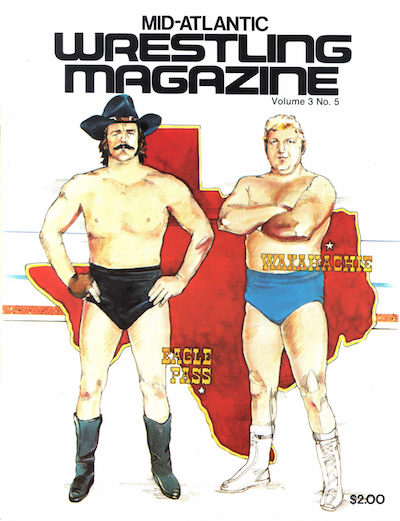
My first memory of being interested in learning about Texas was in 1976 during the year-long war between Paul Jones and Blackjack Mulligan over the United States Heavyweight Championship. Paul was from Port Arthur and Blackjack famously hailed from Eagle Pass, Texas. Both of these places sounded very exciting to me. Part of it was the way they were announced by WRAL TV ring announcer (and promoter) extraordinaire Joe Murnick:


These were the first Texas towns I heard about on wrestling that I remember looking up in my Atlas. I learned that Port Arthur was a relatively small town on the Gulf of Mexico, just east of Houston.

I looked up Eagle Pass, too, and saw that it was a small Mexican-border town about two and a half hours west of San Antonio on the Rio Grande river. But this confused me a bit, because Eagle Pass was nowhere near all the colorful places Blackjack talked about in his local promos. Blackjack always mentioned west Texas towns like Odessa, Abilene, Sweetwater, Midland, or Duvall County in the tales he would weave into the local promos for upcoming Mid-Atlantic area events. But that string of west Texas towns was along the I-20 corridor well over 300 miles north of Eagle Pass. This wasn't adding up.

I asked Blackjack about this once, asking how he came to be billed from Eagle Pass. He confessed that it just had an outlaw sound to it that he liked. And some of Mama Mulligan's kinfolk were from there, too, he said with a smile. Blackjack was always working.

So here is a short list of wrestlers that I watched in the 1970s and 1980s that hailed from the great state of Texas. It isn't a complete list by any means, just the ones I think of the most. I remember looking up all these hometowns in my trusty Atlas during those years. All of them seemed like magical places to me.


Blackjack Mulligan - Eagle Pass
Blackjack loved telling tall tales about the characters he encountered in Texas, many of them archived in our section of this website called Blackjack's Bar-b-que. Of all the wrestlers who hailed from Texas, none of them was more Texan in my eyes than the great Blackjack Mulligan. He set an early  record for the most U.S. title reigns, and was both a hated heel and beloved babyface during his seven years headlining our territory.

Paul Jones - Port Arthur 
Port Arthur always had this very cool, classy sound to it to me as a kid. And Paul Jones was that kind of babyface in his peak years for Jim Crockett Promotions in the 1970s. The quintessential good-guy fighting the uphill battle against the dangerous Texas villain Blackjack Mulligan. Their rivalry in the area is still remembered to this day. Paul held just about every title you could hold in our area, and was a main eventer here for over a decade.

Dick Murdoch - Waxahachie
When Dick Murdoch came for a multi-month stay in our area in 1978, he was billed from Waxahachie, Texas. It took me a while to learn how to spell it to be able to look it up on my Atlas! Waxahachie is just south of Dallas. Murdoch was later billed from Canyon, Texas, which is just south of Amarillo in the west Texas panhandle, and a much more appropriate place to be from given his ties to other west Texas wrestlers like Blackjack Mulligan, Dusty Rhodes, and the Funk brothers. But how cool is the name of a town like Waxahachie? Unforgettable.

Dusty Rhodes - Austin
I knew of Austin of course, being the state capitol of Texas. But it didn't have that same exotic feel to it that some of these lesser known Texas towns I was learning about. But for years I knew that Dusty was the "son of a plumber" from Austin, Texas. Rhodes made regular appearances in our area in the 1970s as a special attraction, similar to Andre the Giant. He was a semi-regular on the big cards held in Crockett's main town of Greensboro. In 1984, he came in full time as booker and led the company to heights it hadn't seen since the George Scott Mulligan/Flair/Steamboat era of the 1970s.

Dory Funk, Jr. and Terry Funk - Amarillo
Amarillo was always a fascinating place to me as a kid because it was where the famous Funk family originated from, and the Funks were wrestling royalty that you read about in all the wrestling magazines. They were the only two brothers to have ever held the NWA World Heavyweight championship and both had many title defense in our area. Real men came from places like Amarillo, Texas. I knew this for a fact.  Late addition: David Chappell reminds me that Dory Funk also worked under a mask as the Texas Outlaw and held the Mid-Atlantic title managed by Paul Jones.

Tiger Conway, Jr. - Houston
Conway was a breakout star here in 1975, teaming with rookie Steve Keirn to upset the world tag team champions, the Anderson Brothers, in a non-title match on television. He and his father had success in Houston, and were billed from that city while wrestling here.

Nelson Royal - Amarillo
Nelson's heyday was before my time as a fan, but he was always around, especially in the 1980s where he made a brief return as the mentor and tag partner of fellow Texan Sam Houston. I loved that Royal always looked like the quintessential Texas cowboy. He was actually originally from Kentucky and lived most of his life in North Carolina and was actually once billed as being from London, England! Our friend Carroll Hall seems to remember that when Nelson turned babyface in the mid-1960s and began teaming with Tex McKenzie, he was billed from Amarillo. Who can ever forget those cool vignettes beginning in December of 1985 when Nelson would invite us for a cup of coffee around the campfire to smarten us up on the Bunkhouse Stampede? During the 1980s he was billed from Mooresville, NC (his legit home), although he was seemingly always considered a Texan.

Wahoo McDaniel* - Midland
Wahoo is listed here with an asterisk because in our area he was primarily billed as being from Oklahoma, where he had great success playing college football at the University of Oklahoma. But occasionally he was billed as being from Midland, Texas, where he actually did grow up and graduated from high school. His father worked the oil fields there. Wahoo's little league coach in Midland was future U.S. president George H.W. Bush, part of another famous Texas family. Wahoo was occasionally billed from Houston, too. I'm guessing it was because his biggest early career success in pro-wrestling was working that city for promoter Paul Boesch. I remember how surprised I was learning later that Wahoo and Johnny Valentine had battled for years in Texas long before both were brought to the Mid-Atlantic area by booker George Scott. I just assumed as a kid that their first battles were in our area. Boy was I wrong about that.

Stan Hansen - Borger
My exposure to Stan "The Lariat" Hansen in the 1970s was from watching "Georgia Championship Wrestling" when Superstation WTCG-17 (which later became WTBS) first appeared on our local cable system in 1976 or 1977.  Gordon Solie always called him "the bad man from Borger, Texas." Borger is about 30 miles northeast of Amarillo in the Texas panhandle. Hansen only wrestled in the Mid-Atlantic area occasionally, most notably in a late-70s tag team tournament with partner Blackjack Mulligan, and as a NWA world tag team champion with partner Ole Anderson in 1982.

Bobby Duncum - Austin
Duncum had a big battle with Blackjack Mulligan in the early 1980s which always seem centered around their real and/or fabled history with each other in Texas. Whether it was in Texas bullrope matches or Texas death matches, they shed some blood in our rings, and it always seemed to be a fight over the love of some former Texas sweetheart like Sarah Joe Puckett. Or at least that's how I remember it. Mulligan and Duncum's promos were filled with west Texas references, and I always wondered if it was was part of the lore or was part of a shoot!

Jake Roberts
Jake "The Snake" Roberts came here in 1981, when he was a tall, lean and lanky Texas cowboy through and through, and had a great look in that regard. This was before he carried around a snake or had created the DDT or was possessed by the devil and all the rest.  I always liked the Texas cowboy version of Jake Roberts the best. He was later billed from Stone Mountain, Georgia, but in our area in the early 1980s he was billed from Texas, although I can't recall them ever saying where in Texas. (If you remember, let us know!)

Outlaw Ron Bass - Pampa 
I confess I never looked up Pampa on my Atlas, and never knew where it was until I saw it included on an exit sign driving on I-40 from Amarillo to Oklahoma City in 2011. Pampa is a tiny little town between the two. Booker Ole Anderson brought "Outlaw" Ron Bass in to our area in 1981 to fill the Texan role left vacant by the departure of Blackjack Mulligan, but because the two had such a similar persona, the fans never rallied around Bass here the way they always had ol' Mully. 

The Von Erich Brothers* - Denton
No wrestlers were more associated with the state of Texas in the 1980s than the Von Erich brothers. David and Kevin only wrestled once in the Mid-Atlantic area, in a tournament here, and so they have an asterisk beside their name, too. But they have to be on my list. Their syndicated TV show aired in many markets in our area, and even if you didn't see them on TV here, you were well aware of them through their endless coverage in the wrestling magazines. David Von Erich's nickname was "the Yellow Rose of Texas" which became younger brother Kerry Von Erich's symbol, too, after David's untimely passing. It was part of a memorable tribute to David when Kerry defeated Ric Flair for the NWA World Championship. The Von Erich exploits in the ring were primarily carried out in Dallas, Fort Worth, and surrounding areas, but the town always associated with them is Denton, some 20 miles north of the Dallas/Fort Worth area.

Tully Blanchard - San Antonio
Tully was always billed from San Antonio, and his father Joe Blanchard promoted wrestling there in the late 1970s and early 1980s. Joe Blanchard actually had some of the Crockett champions down to his territory to defend their titles occasionally (which we cover in part two of this series.) Tully first made a name in the Mid-Atlantic area in the late 1970s on the mid-card, but returned in 1984 and headlined here until leaving in 1988 for the WWF.  He also brought another notable Texan into the area in the mid-80s, Nickla "Baby Doll" Roberts, to accompany him as his "perfect 10."

Sam Houston - Houston
In the tradition of the "tall drink of water" cowboys like Jake Roberts a few years before him, Sam Houston personified the Texas cowboy image for Jim Crockett Promotions during the Dusty-era of JCP. (Dusty had assumed more of a "David Allen Coe truck-drivin' hat" persona in the mid-1980s.) I always thought Dusty had really big plans for Sam, but they never panned out for various reasons. Houston teamed with veteran Nelson Royal during those years, too, and that gave him even more Texas street cred.

Late Addition!
Black Bart - Pecos
"Dadgum!" I can't believe I left out Black Bart! Brian Rogers reminded me, and dadgum it, how can I not include a guy who yells "TEXAS!!" as he leaps from the second turnbuckle with a big legdrop! Bart was billed from Pecos, Texas, which is further west on out that I-20 corridor past Odessa. The former Ricky Harris in the Mid-Atlantic area in the early 1980s, Black Bart was one half of the Mid-Atlantic tag team champions with the aforementioned Ron Bass managed by James J. Dillon. He was National Champion as well. But my lasting memory of Bart was that Stan Hansen-esque primal yell of 'Texas!!" as he lept from the turnbuckle with that big leg drop. Sorry I forgot you to begin with, Bart!


Those are the wrestlers that I think of when I think of Texas wrestlers working for Jim Crockett Promotions in the 1970s and 1980s. I fully realize my list isn't complete. David Chappell, who has an incredible memory for details for things like this, sent me his list of wrestlers in our area who were billed as coming from Texas during his years watching JCP wrestling. He also admits he's probably left someone out, so if you can recall any others, please let us know.

CHAP'S LIST
Scott Casey, Sonny King, Paul Jones, Tiger Conway, Jr., Wahoo, Blackjack, Brian Adias, Baby Doll, Tully Blanchard, Bobby Duncum, Dory Funk, Jr., Terry Funk, Chavo Guerrero, Jr., Stan Hansen, Sam Houston, Killer Karl Kox, Dick Murdoch, Barry Orton, Dusty Rhodes, Jake Roberts, Richard Blood, Barry Windham, Mark Youngblood, Skandor Akbar, Bruiser Brody, Skip Young, Gary Young, Len Denton.

In 2011, I took a long road trip through the Southwestern and Midwestern United States. I met a good friend in Dallas and we went to the State Fair and rode the Texas Star. Afterwards I headed west through the oil and cotton country of west Texas, driving through towns like Abilene, Sweetwater, Midland and Odessa. Then I headed north into the panhandle through Lubbuck, Canyon, and Amarillo. This was Funk country, Rhodes and Murdoch country, Mulligan country. Throughout that beautiful drive, I heard the echos of bodyslams in the ring and the voices of Bob Caudle, Gordon Solie, and Joe Murnick naming those towns whenever they spoke of these great Texas legends. I treasure the memories of that adventure west.

In PART TWO of this "Texas Connections" feature, we'll take a look at some of the many times Jim Crockett's area championships were defended for other promoters in some of the Texas territories of the NWA including the NWA World Tag team titles, the U.S. title, and the NWA TV title.

Originally published October 31, 2017 on the Mid-Atlantic Gateway.

http://midatlanticwrestling.net/nwabelt.htm

Thursday, May 20, 2021

A Story Well Told: Florida's Role in the Race/Funk NWA Title Change in Toronto (1977)


by Dick Bourne
Mid-Atlantic Gateway

We're always appreciative of newspapers that do a good job of presenting wrestling in a journalistic fashion. This is a particularly good article in the Tampa Tribune promoting an upcoming card for Championship Wrestling from Florida on February 8, 1977, just two nights after Harley Race defeated Terry Funk with an Indian deathlock to win the NWA World Heavyweight Championship. 

Who knows who wrote the piece. It doesn't really sound like it came from the office, but it sounds way too informed to be written by the a staff sports writer either.

The article captures all the complete twists and turns in the wonderful story leading up to this night at the fabled Fort Homer Hesterly Armory. There were actually two separate stories being told.

The first story cemented former champion Jack Brisco as Florida's top contender for the NWA title. Many of the fans coming to the Hesterly Armory that Tuesday night had witnessed Brisco cleanly beat Harley Race, also a former champion, that past Saturday in St. Petersburg. Surely Brisco could beat Race again, this time with his newly won NWA World championship at stake in Tampa.
The second story told answered a question many might have had following the finish to the title change match in Toronto. As a teenage fan watching wrestling in 1977, when the film of the match from Toronto was shown on Mid-Atlantic television, it seemed strange to me that Race had won by submission with an Indian deathlock. I had only ever seen our local hero Paul Jones win with that hold. In the wrestling magazines, it seemed the reports usually suggested Race typically won with various suplexes or his infamous flying headbutt from the top turnbuckle, resulting in wins by three-count pinfall. Why had Race instead gone for the submission for the win against Funk in Toronto? 

The answer, it turned out, played out the night before in Florida.

The main event of the card in St. Petersburg on Saturday night was Terry Funk defending the NWA title against Dusty Rhodes. As the article above reports, Funk injured his knee in the match against Rhodes, and "against his better judgement" went ahead with the scheduled title defense against Race the next night in Toronto.

The rest, as they say, is history. Race knew what most fans didn't about the night before in the St, Petertsburg Bayfront Arena. Funk was hurt, and Race took advantage. He defeated Funk in 14:10 with an Indian death-lock to capture the gold belt. (I can still hear ring announcer Norm Kimber make the famous call.) It was a hold Race used infrequently (if ever?) and seemed almost out of place as it happened that night in Maple Leaf Gardens.

As the author of the article pointed out. Brisco's victory over Race in St. Petersburg came three days too early. Race got the better of him in Tampa this night to retain.  

  • SAT FEB 5, 1977 - St. Petersburg, FL - NWA Champ Terry Funk injures his knee in a successful world title defense against Dusty Rhodes. On the same card, Jack Brisco defeats Harley Race.
  • SUN FEB 6, 1977 - Toronto, ON - Harley Race defeats Terry Funk to win the NWA World Title. Race deploys a rarely-used Indian deathlock to win the match, exploiting Funk's hurt knee from the night before in St. Petersburg.
  • TUE FEB 8, 1977 - Tampa, FL - New NWA Champion Harley Race defeats Jack Brisco to defend title, the result of the match written about in the article seen above.

The injury to Funk's knee in St. Petersburg gave Funk an excuse he could bandy about after his loss to Race in Toronto the next night.

The article also colors between the lines nicely, accurately reporting key dates in the NWA title history of Brisco and the Funk Brothers, and even including a reference to an NWA title change in the same building eight years earlier to the week.

It's just an all around amazing piece to be found in a newspaper, and one of my favorite clippings from the history of the NWA title changes during the domed-globe era. And for those curious, it explains one of the mysteries about the historic Toronto finish some fans may have had at the time. 

* * * * * 

Video of Harley Race's win over Funk in Toronto can be found on the Domed-Globe website here.

Late update: See three pages from the Florida program "The Grapevine" for the Feb. 5 show in St. Petersburg that set the stage for Toronto. (Thanks@bobbynorton9115 on Twitter.)  

This article was originally posted on our sister website, The Domed-Globe.

Wednesday, May 19, 2021

In the Tiger's Den: Paul Jones confronts NWA Champion Terry Funk


"In the Tiger's Den"

On the February 14, 1976 episode of Jim Crockett Promotions' "Wide World Wrestling" television show, host Ed Capral interviews NWA world champion Terry Funk. Funk was frustrated with the fact that Paul Jones held a victory over him which took place only a few weeks before Funk won the NWA title from Jack Brisco.

That victory was on the annual Thanksgiving night show at the Greensboro Coliseum when Jones pinned Funk to win the United States Heavyweight Championship. Jones' win paired with the title made him the undisputed number one contender for Terry Funk's NWA World Championship.

In this vintage audio recording, Funk calls out Paul Jones and a brief confrontation occurs. It takes place during the 2-minute "halftime" interview segment of the program. This is a classic Terry Funk promo during his reign as champion.

Originally published October 2012 on our sister website The Domed Globe.

Monday, November 02, 2020

The World Heavyweight Champions and the Titles They Held in the Mid-Atlantic Area

by Dick Bourne
Mid-Atlantic Gateway

During the Mid-Atlantic era of 1973-1986 (when the territory went by that name) there were several NWA world champions that held regional titles here either before or after they were world champion.

We take a look at those champions and the titles they held.


Dory Funk, Jr.
Mid-Atlantic Heavyweight Championship (1983, 1984)

Okay, I'm already cheating a little bit here. Technically the "Mid-Atlantic era" began in October 1973 when the Eastern title was renamed the Mid-Atlantic title, and the Atlantic Coast tag team titles were renamed the Mid-Atlantic tag team titles. Jack Brisco was NWA champion by that time. But since we've broadly listed the Mid-Atlantic years as beginning in the year 1973, I thought I'd include the man who was NWA champion at the beginning of that year, Dory Funk, Jr.

Dory won the the Mid-Atlantic Championship in early 1983, nearly 10 years after losing the NWA title to Harley Race in Kansas City. I always loved the fact that the man he defeated was none other than his arch rival in the 1970s Jack Brisco. Funk/Brisco was the defining rivalry of the 1970s, and so it was very cool to see these two legendary figures trade our territory's championship all these years later.

Funk also held the Mid-Atlantic title in 1984 wrestling under a mask and known as the Masked Outlaw.


Harley Race
United States Heavyweight Championship (1975)

When booker George Scott decided to establish a United States championship in the Mid-Atlantic area, the man he chose to launch that title was former NWA champion Harley Race. Race had held the NWA title for three short months in 1973, and that line on his resume helped give the new title credibility right off the bat.

Race was brought in to defend the U.S. title against Johnny Valentine, putting Valentine over to establish the championship in the territory. He was announced on area television as U.S. champion weeks before the July 1975 match with Valentine, but in reality he was champion for that one night only - bringing the title to the ring and dropping it to Valentine in what is still remembered to this day as a classic.


Jack Brisco
Eastern Heavyweight Championship (1971, 1972)
Mid-Atlantic Heavyweight Championship (1982)
World Tag Team Championship (with Jerry Brisco in 1983 and 1984)

Jack Brisco held area championships both before and after he was NWA World Heavyweight champion. He won the Eastern Heavyweight title (the forerunner to the Mid-Atlantic title) from the Missouri Mauler just after Thanksgiving in 1971 at a High Point, NC TV taping, and then traded the title with Rip Hawk in 1972, a little over a year before winning the NWA title from Harley Race.

Brisco was never a regular here in the early 1970s, despite winning our area's championship twice. His home area was always Florida, but he was booked out to lots of territories for exposure as he was being groomed for an NWA title run. He made lots of shots here in 1972 and 1973 leading up to his NWA title victory over Race, usually over a weekend, but sometimes lasting a whole week.

Brisco's first full-time run in the Mid-Atlantic area began in the spring of 1982 and lasted until jumping to the WWF in 1984 after selling his stock in the NWA Georgia promotion to Vince McMahon. In 1982 he had great feuds over the Mid-Atlantic title with Roddy Piper and an old Florida rival from the early 1970s, Paul Jones. He eventually lost the title for good after his 6th title reign (which included the Eastern title reigns) to career arch-rival and former world champion Dory Funk, Jr.

Following his Mid-Atlantic title run, Jack reunited with his brother Jerry to defeat Ricky Steamboat and Jay Youngblood for the NWA World tag team titles in the late spring of 1983 and held those titles multiple times over the next year before losing them in April of 1984 to Wahoo McDaniel and Mark Youngblood right before leaving for the WWF.


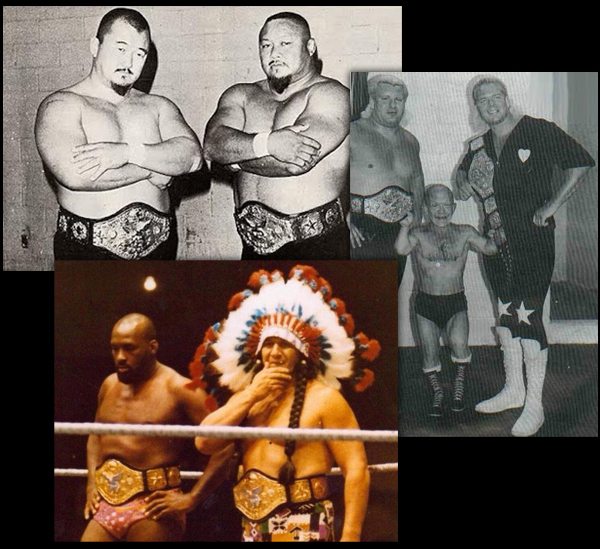
Giant Baba
None

Baba obviously never held a title here, but did wrestle here on a few occasions, most notably a 1977 card in Greensboro that shared talent between Jim Crockett Promotions and Baba's All-Japan Wrestling. Baba defeated Baron Von Raschke on that card.

Image from The Domed Globe Website at tenpoundsofgold.blogspot.com


Terry Funk
United States Heavyweight Championship (1975)

Funk was given a short run as U.S. champion in November 1975 to set the stage for winning the NWA title in December of that year.

Following champion Johnny Valentine's career-ending airplane accident in October 1975, Funk was tabbed to win the tournament to fill the vacant title. Funk defeated Paul Jones in the finals of the Greensboro tournament, and then returned three weeks later on the big Thanksgiving night show in the same city to drop the title to Jones. Two weeks later, Funk defeated Jack Brisco to win the the NWA World title in Miami Beach, Florida.

Dusty Rhodes
NWA World Tag Team Championship (with Dick Slater in 1977, Manny Fernandez in 1984)
NWA World TV Title (1985, 1986)
National Heavyweight Title (1985)
United States Heavyweight Championship (1987)

I'm cheating a little bit again here by listing the NWA World Tag Titles in 1977, because even thought Rhodes and partner Dick Slater did indeed hold those belts for four weeks, they never actually defended them in our area. But those NWA World Tag Team titles were Mid-Atlantic area titles, established here in early 1975. The Andersons took the titles with them to Georgia in late 1976 and basically were there with them for the better part of a year, trading them with Flair and Valentine during that time. It was while they were in Georgia with the belts that they lost the titles to Dusty Rhodes and Dick Slater in September of 1977.

Rhodes and Slater were set to defend the titles in Greensboro on 10/30/77 against former champions Flair and Valentine but lost the titles back to the Andersons a week or so before that scheduled match.

Rhodes, however, did win the World Tag Titles with Manny Fernandez in 1984. It was at the beginning of his run as booker for Jim Crockett Promotions, and in the next four years would give himself multiple runs as NWA World TV champion in feuds with Tully Blanchard and Arn Anderson. He also had a run as National Heavyweight champion, awarding himself the title after firing Buddy Landel in December of 1985.

Rhodes won the U.S. championship from Lex Luger at Starrcade '87. He was stripped of the title after accidentally hitting Jim Crockett with a baseball bat in 1988. It was a title Rhodes had chased at various times since the title had been established in 1975. He was Johnny Valentine's first challenger in Greensboro, and challenged Flair for the title in a memorable match in 1979 that involved special referee Buddy Rogers. After that long chase, it was nice to see him finally win it.


Tommy Rich
None

Tommy Rich never held titles here, but he did wrestle here on occasion, most notably a short run when Ole Anderson was booking both the Mid-Atlantic and Georgia territories simultaneously in 1981. He also wrestled here for about a month in late 1983.


Ric Flair
Mid-Atlantic TV Championship (1975, 1977)
Mid-Atlantic Tag Team Titles (w/ Rip Hawk 1975, Greg Valentine 1977, John Studd 1978)
Mid-Atlantic Heavyweight Championship (1975, 1976)
United States Heavyweight Championship (1977, 1978, 1979, 1980)
NWA World Tag Team Championship (with Greg Valentine in 1976 and 1977; and Blackjack Mulligan in 1979)

Ric Flair first won the NWA World Heavyweight championship in 1981. Prior to that he held every regional and national championship there was in the Mid-Atlantic area. Mid-Atlantic Championship Wrestling was his home area, and he is the only world champion to come straight out of our territory.

His first championship was the Mid-Atlantic tag title with his "uncle" Rip Hawk in 1974. He followed that up with his first singles title defeating Paul Jones for the TV title in early 1975.

But his break-out run began with winning the Mid-Atlantic title from Wahoo McDaniel in September of 1975, just weeks before being involved in the same plane crash that ended the career of Johnny Valentine. Though he was told he would likely never wrestle again, Flair returned better than ever in early 1976 and held the Mid-Atlantic and United States singles titles as well as the NWA World Tag Team titles over the next 6 years before finally winning the ultimate prize, the NWA World Heavyweight championship.


Kerry Von Erich
None

To my knowledge, Kerry never wrestled for Jim Crockett Promotions, although I could be wrong. Please let us know if I am! His two older brothers did, though. Kevin and David teamed in a January 1982 tag team tournament  in Charlotte, NC.


 Originally published September 27, 2015 and August 5, 2019 here on the Mid-Atlantic Gateway.

* * * * * * * * * *

For more information on these great champions of the National Wrestling Alliance, check out the book "Ten Pounds of Gold."

http://www.midatlanticgateway.com/p/origins-of-mid-atlantic-title.html

Sunday, June 07, 2020

Connecting the Dots: Funk, Brisco, Race, and Rhodes

by Dick Bourne
Mid-Atlantic Gateway

During the first years of my hardcore fandom of pro wrestling, 1975-1976, there were four main singles stars in the Mid-Atlantic area. Those wrestlers were Wahoo McDaniel, Paul Jones, Ric Flair, and Blackjack Mulligan. This was my "A-list."

But there was another "A-list" I was fascinated by, too, and that was a group of four wrestlers that were atop the NWA's world championship picture during those years. That group included Jack Brisco, Terry Funk, Harley Race, and Dusty Rhodes.

During the mid-to-late 1970s, these were the guys that dominated the NWA coverage in the newsstand magazines. And even though Rhodes didn't win the NWA title until 1979 (and really only seriously in 1981), he was always in the title picture, and the darling of the magazines. He was also a special attraction in our area, especially in the 1970s, as much or more than the NWA champions.

I was always fascinated by how these four always were interconnected from a storyline and title-lineage perspective. I remember this first really dawned on me when our TV programs showed the tape of Harley Race beating Terry Funk for the NWA title in Toronto in 1977, and Whipper Billy Watson (a former NWA champion and Toronto legend doing commentary for the match) made the observation that not only was Race now a 2-time champion, but he had defeated both of the Funk brothers in doing so.

From that point forward, the Funk/Brisco/Race triangle (with Rhodes thrown in there causing trouble) was one of my favorite subjects to dwell on.

So it was with great pleasure that I recently came across this wonderful little article from the Tampa Tribune published two days after Race defeated Funk in that very match in Toronto, and promoting the matches later that night at the Hesterly Armory in Tampa. The article is un-credited, but whoever wrote it knew their stuff, and it was a delight reading how he sorted through all of the these connections I used to think about as a young teenage wrestling fan, and related them beautifully to the current events in Florida.

From the article in the Tampa Tribune, February 8, 1977, via Newspapers.com:

Race Regains NWA Title, Defends Against Brisco

Harley Race won the National Wrestling Alliance world heavyweight championship against Terry Funk in Toronto Sunday night and will defend the title against Jack Brisco tonight at Fort Homer Hesterly Armory.

As far as Brisco is concerned, their championship fight is three nights too late. Brisco beat Race Saturday night at the Bayfront Center in St. Petersburg.

The turn of events involving Funk, Race, Brisco and Dusty Rhodes make soap operas seem awfully dull.

Rhodes beat Funk in the featured title match Saturday night at the Bayfront, but Funk was disqualified for kayoing the referee and the title didn't change hands.

Funk, however, injured a knee in that match and against better judgment went ahead with his scheduled match with Race in Toronto Sunday night.

Race beat Funk in a quick 14 minutes, 10 seconds with an Indian death lock, which places pressure on the knee and ankle.

NWA rules require a new champion to fulfill the former champion's match commitments. Interestingly, this brings Race right back against Brisco on tonight's Gasparilla Championships starting at 8:30 at Hesterly.

Terry Funk defeated Brisco for the championship in Miami in December of 1975.

Race previously held the title by defeating Dory Funk Jr. - - Terry's brother - - in March of 1973 and Race lost it to Brisco the following July.

An interesting triangle.

And who does Rhodes, the popular "American Dream wrestle tonight at Hesterly? Dory Funk Jr.

So, tonight's intriguing lineup pits Race vs. Brisco and Rhodes vs. Funk -- one champion and two ex-champs in the top two bouts.

It was in the same Gasparilla week of 1969 that Dory Funk Jr., lifted the heavyweight championship from Gene Kiniski at Hesterly.

Race has been wrestling professionally for 17 years. He turned pro with the NWA at 16, the youngest wrestler ever to do so.

Race makes his home in Kansas City.

I learned another little NWA title history storyline nugget in this article, too. I never knew the bit about Terry Funk injuring his knee in St. Petersburg the night before the title change in Toronto. Maybe I'd read that before and just forgotten it, but it was a nice little twist to NWA title lore.


http://www.tenpoundsofgold.com

Saturday, May 30, 2020

Magazine Memories: Paul Jones fights Terry Funk


by Dick Bourne
Mid-Atlantic Gateway

This was always one of my favorite photos in the old Weston magazines, it ran in many issues over the years in stories or mentions about Paul Jones and/or Terry Funk.

What I like is the way Funk is selling. It was a familiar look for him when selling during the 70s and early 80s.

Jones is working over Funk's leg, perhaps setting him up for his trademark Indian deathlock. Funk has his arms wrapped around his head - - his right over his eyes, his left over his ear. I used to joke this was the "see no evil" method of selling. If I can't see you and and I can't hear you, then you can't hurt me.

One of the best matches on tape to see Funk sell in this way is the famous Toronto match in 1977 where he loses the NWA title to Harley Race.

It's a small thing, really, but it always stood out to me, and it did in this great photo as well.

 Originally published May 30, 2018 on the Mid-Atlantic Gateway


http://www.midatlanticgateway.com/p/us-title-book.html

Tuesday, March 03, 2020

1976 Provided a Leap Year Bonaza

by David Chappell
Mid-Atlantic Gateway


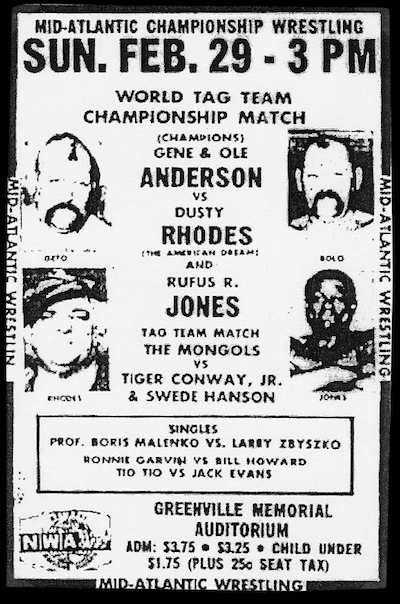
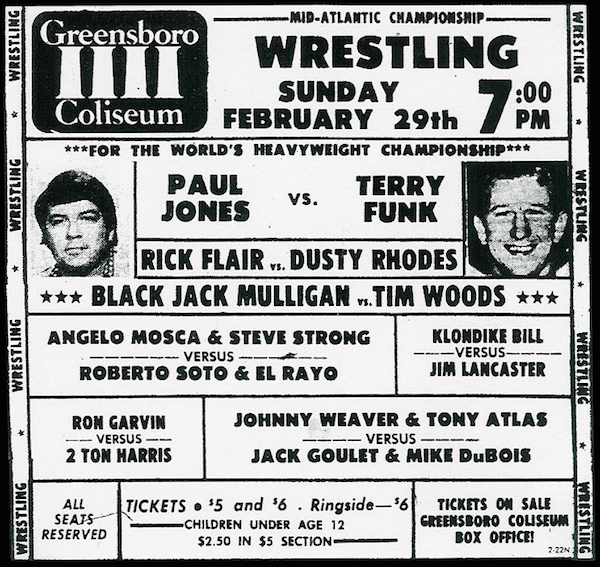
With leap year only hitting our calendars once every four years, you might think there would be a dearth of dynamic leap day cards during the Mid-Atlantic Championship Wrestling era. But that wasn’t the case, and in fact, on February 29, 1976 there were TWO major cards both of which arguably had historical significance.

Greenville, South Carolina received a special leap day treat, as the Memorial Auditorium hosted an extremely rare Sunday card on February 29, 1976. Monday was Greenville’s regular wrestling day. But on this Sunday star-studded leap day lineup, NWA World Tag Team Champions Gene and Ole Anderson battled to a wild double disqualification result with the charismatic team of the “American Dream” Dusty Rhodes and Rufus R. “Freight Train” Jones! Dusty was brought in as a special attraction from outside the Mid-Atlantic area for this bout. The fans in Greenville also got to see Geeto and Bolo Mongol dominate Tiger Conway and Swede Hanson, and the Mongol’s manager “Professor” Boris Malenko make an increasingly rare visit into the ring, dispatching the young but talented Larry Zbyszko. Rounding out the leap day card in Greenville, rough and tumble Ronnie Garvin whipped up on the crafty Bill Howard, while the curtain raiser saw Tio Tio draw with “Dynamite” Jack Evans.

The second leap day card in 1976 occurred at none other than the cavernous Greensboro Coliseum in Greensboro, North Carolina. And it featured a spectacular main event, with NWA World’s Heavyweight Champion Terry Funk defending his prized belt against number one contender and reigning United States Heavyweight Champion, Paul Jones!

At this point in time, Paul Jones was at the absolute zenith of his Mid-Atlantic career. Paul had beaten Terry Funk on November 27, 1975 in Greensboro for the U.S. belt, and widely proclaimed to the fans that he had Funk’s number. Jones was defending his U.S. Title impressively against the mammoth Blackjack Mulligan, and Paul’s popularity was through the roof. It appeared to many that Jones would ride his wave of staggering momentum to a World’s Title victory on this night. Alas, it was not to be as Terry Funk disappointed everybody in Greensboro with a pinfall victory.

In my opinion, Paul Jones never recovered from this loss fully, as within two weeks he would drop the U.S. Title to Blackjack Mulligan. Paul was never again the number one contender to the World belt, and as tantalizingly close to the NWA World Title as he was that leap year’s night in Greensboro, though Jones certainly had his fair share of triumphs throughout the remainder of the Mid-Atlantic years.

Despite the bitter disappointment of the Paul Jones defeat, the fans in Greensboro did have a lot to cheer about on this leap day, 1976. In the semi-final, they saw the skillful Tim Woods heap a rare defeat on the brutish Blackjack Mulligan. These two had been battling since around the time of the big U.S. Title Tournament in Greensboro on November 9, 1975, when Woods had cost Mulligan a chance to advance in that epic tournament. Dusty Rhodes continued his leap day “double shot” in the Mid-Atlantic area, dropping a disputed decision to the chicanery of Ric Flair, which of course silenced the fan’s cheers again for a bit. 

The undercard of this Greensboro leap day show was excellent, and was very fan friendly! The high-flying duo of Roberto Soto and El Rayo outlasted the powerhouse duo of Angelo Mosca and Steve Strong. A significant losing streak for Strong was continued by this bout. The impressive new duo of Mike “The Judge” DuBois and “Sergeant” Jacques Goulet battled to an entertaining time limit draw with Johnny Weaver and the powerful Tony Atlas. Ronnie Garvin completed his leap day “double shot” 2-0 with a win over the always obnoxious George “Two Ton” Harris. Klondike Bill opened the festivities with a decision over big Jim Lancaster.

Yes, in 1976, Mid-Atlantic Championship Wrestling was the place to be on leap day! With leap day cards like that, it’s a shame there was a four year wait for the next leap year to roll back around!

Monday, February 03, 2020

Mystery Solved? The 1975 United States Tournament Belt

by Dick Bourne
Mid-Atlantic Gateway

Can you imagine at what point in the evening that George Scott, Sandy Scott, David Crockett and Jim Crockett were all standing around looking at each other asking, "Who brought the belt?"

One of the longest unsolved mysteries in Mid-Atlantic Wrestling history, especially for belt enthusiasts, involved trying to figure out what belt Terry Funk held high over his head the night he won the United States title tournament in November of 1975. Because it wasn't the United States title belt.

This tournament was held as a result of the October 1975 plane crash in Wilmington, NC that ended the career of then reigning U.S. champion Johnny Valentine. The tournament George Scott booked is the most famous and, arguably, the best tournament ever held in Mid-Atlantic Championship Wrestling history.

Not only were the area's top wrestlers involved, but Scott booked some of the top wrestlers from other territories around the country including Red Bastien, Dusty Rhodes, Harley Race, Ray Stevens, Terry Funk and Blackjack Mulligan. Mulligan wound up staying in the territory taking Valentine's spot as the area's top heel. But it was another Texan that wound up capturing the U.S. championship that night - Terry Funk.

Terry Funk holds up the "mystery" belt after
winning the U.S. tournament in in 1975
(from pg. 59 in the book)
 
 
Funk wrestled four matches in that tournament, defeating Bastien, Rufus Jones, and Rhodes before topping Paul Jones in the tournament final.

But when the referee raised Funk's hand, the belt he handed him was not the United States Championship belt.

Oddly, there have never been many photos published from that night, but there was one key photo documenting Funk's win that was published in an early 1976 issue of "Mid-Atlantic Wrestling Magazine," JCP's in-house publication sold at the matches. There, bloodied and exhausted and leaning against the ring ropes in the Greensboro Coliseum, Funk holds the belt high above his head after defeating Paul Jones in the tournament's final match. But it was nearly impossible to tell in the low-resolution photograph just what belt this was standing in for the United States championship.
 
Apparently, the real U.S. belt was not in the building for a reason we will likely never precisely know. Johnny Valentine was the reigning champion at the time of the plane crash and had the belt in his possession at the time of the accident. The most reasonable and likely explanation is that, in the chaos that ensued following that tragedy, the office simply failed to get the belt back from him in the weeks between the crash and the tournament. But regardless of the reason, it clearly wasn't there.

Can you imagine at what point in the evening that George Scott, Sandy Scott, David Crockett, and Jim Crockett were all standing around looking at each other asking, "Who brought the belt?"

The promoters had a big problem on their hands. They had a high profile tournament taking place in front of a sold-out Greensboro Coliseum and on the night of the tournament had no belt to present to the winner.

So what explains the photo of Terry Funk holding a belt high over his head? What belt was it? 


CANADIAN FRIENDS MAKE THE CONNECTION
While working on his book about the Canadian Heavyweight title in 2019, my friend Andrew Calvert (who publishes the respected Maple Leaf Wrestling website) wrote me that he thought perhaps he and some of his friends had solved the mystery.

Andrew had just finished reading my book "United States Championship." He closely inspected the photo of Funk and thought the belt looked familiar. He consulted two of his friends who were knowledgeable about Mulkovich belts, Chris Kovachis and Griff Henderson. They both concluded independently from each other that they thought  the belt was one of the WWWF Tag Team championship belts.

But what could possibly explain why a WWWF tag team belt would be in the Greensboro Coliseum that night?


THE BLACKJACKS
When Andrew presented their theory, it immediately made sense to me. One of the "outside" wrestlers working that show that night was Blackjack Mulligan, who just happened to currently be one half of the WWWF Tag Team champions with partner Blackjack Lanza. Mulligan had worked for Jim Crockett Promotions for a three-month span in the spring of that year, but left to go to the WWWF to reunite the famous team of the Blackjacks.

Blackjack Mulligan on WWWF television wearing his WWWF Tag Team title belt.

For context, booker George Scott had already arranged to bring Blackjack Mulligan back to the Mid-Atlantic territory to take Johnny Valentine's spot as the top "heel" in the territory. But Mulligan was presently still working out his notice with Vince McMahon, Sr. at the time of the U.S. tournament in Greensboro. During the months of November and December, he was back and forth between both promotions. And the night of the tournament, he was in for a single-night shot, his belt in his bag.

One can only speculate at what point that day everyone figured out that this was the belt they could use, but it seems clear that Blackjack Mulligan had reached into his bag and pulled out a WWWF belt that could be recognized as the United States championship - - at least for that one night.

Judge for yourself. Take a look at the belt Funk is holding in the photo above and compare it to the collage of photos of various WWWF Tag Team champions of that era below.

Three different teams wearing the WWWF Tag Team championship belts.
Mr. Fuji and Toru Tanaka, the Valiant Brothers, Sonny King and Chief Jay Strongbow

The photos seem to provide visual confirmation at the very least, and the argument is further buttressed by the fact Mulligan was on the Greensboro show and was the only possible connection to those belts at that point in time.

By the time Terry Funk returned to Greensboro three weeks later to defend the U.S. title against Paul Jones on the annual Thanksgiving night card in Greensboro, the company had regained possession of the original U.S. belt from Johnny Valentine.


FIVE-DECADE MYSTERY SOLVED?
For the better part of the last 45 years, I've wondered what belt Funk held over his head in Greensboro. No one had ever been able to provide a viable answer until now. PWInsider's Mike Johnson once wrote after reviewing my book Big Gold that I was the "Indiana Jones of title belt archaeology." That was a very nice compliment. I wish I had uncovered this information on the U.S. belt on my own, but all credit goes to the Canadian raiders of the lost ark, Andrew, Chris, and Griff. I will always be grateful to them. (Visit Andrew Calvert's website at mapleleafwrestling.blogspot.com.)

While we can't be 100% certain the mystery is solved, it's as close as we've ever come, and it's hard to imagine any other possibility at this point. But we are always open to further information.

I regret not having this information before finishing my book on the United States title history. But I hope to include it in an updated volume at some point. 

For all the details on the rich history of JCP's United States Heavyweight Championship, the champions, and the five belts that represented the title, check out our book "United States Championship" available via he Mid-Atlantic Gateway Book Store and on Amazon.com.


http://www.midatlanticgateway.com/p/us-title-book.html