Showing posts with label Jim Crockett Jr.. Show all posts

Saturday, March 04, 2023

The Big Gold Nameplate Exchange


By Dick Bourne
Mid-Atlantic Gateway

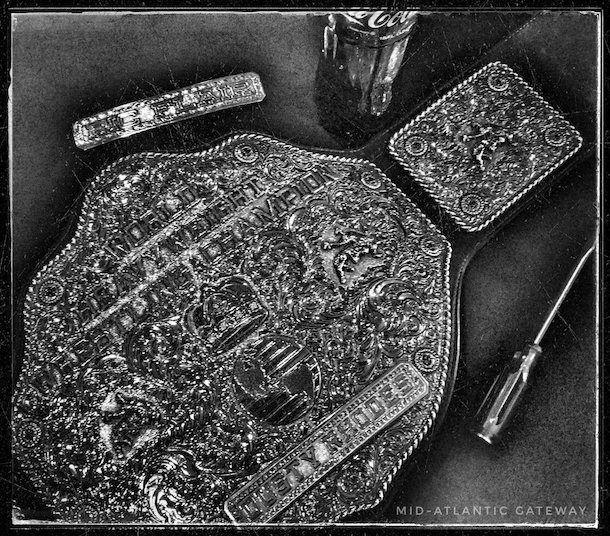
Take a look at the image above and just imagine Klondike Bill’s workbench in his shop behind the office on Briarbend Drive a few days after the Great American Bash in Greensboro, July 26, 1986.

Yes, that's the Dusty Rhodes nameplate on the original 1986 Big Gold belt. It was rumored to not have existed. Jim Crockett told us on television that next Saturday afternoon that a nameplate for Dusty had been ordered and would be on the belt soon. But we never saw it, and most of us never believed it. As fans, we all were pretty confidant Ric Flair would get the Big Gold belt back soon and his iconic nameplate would go back on the belt. So we figured, why would they go to the trouble and expense behind the scenes of ordering a new nameplate?

But the Dusty nameplate was indeed ordered. And it was delivered. It just didn't make it in time for Dusty to have it on the belt when he was NWA champion for the third and final time. 

We verified the order later with the actual Crumrine order form and art work (it's all in the Big Gold book by the way - - thank you Teddy Srour.) But what we didn't know when the book was published was that the Dusty nameplate had actually been made until Cody Rhodes posted about it on Twitter several years ago. (See that story: American Dreams Come True.) Cody found it in a cigar box when going through his dad's belongings after Dusty had passed.

The original photo above was taken by Clint Beckley, and we created the special fantasy image above.   

See also: Big Dust, Big Gold

Edited and expanded from an original Twitter and Gateway post in September 2022.

Saturday, September 10, 2022

Avenger vs. Super Destroyer: Mid-Atlantic's Most Obscure Championship (Part 3)

by David Chappell
Mid-Atlantic Gatewa
y

Catch Up on PART 1 and PART 2 

PART THREE:
THE AVENGER VS. THE SUPER DESTROYER

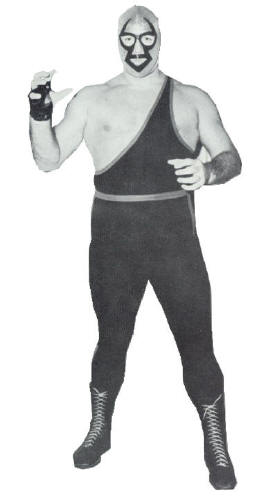
It would be a battle of the masked men as the Super Destroyer and the Avenger battled for the Mid-Atlantic Television Arm-Wrestling Championship as the President of Mid-Atlantic Championship Wrestling, Jim Crockett, Jr., announced to the fans “This is for the Championship.”

In this championship encounter, the glove of the Super Destroyer would not be an issue as the Avenger forcefully announced, “Leave the glove on!”

Crockett exclaimed twice in the early seconds of the match, “The Avenger has the advantage,” as the Super D’s arm was being pushed downward to the delight of the WRAL studio audience who were screaming their approval. The Destroyer made a brief comeback, only to have the Avenger again gain the upper hand. Crockett noted, [the Destroyer’s] arm is about halfway down…[the Avenger]became within a few inches of being the winner!”

The contest then leveled out a bit as Crockett noted, “It’s all even now…straight up.” The Super Destroyer then claimed the edge, but almost immediate Mr. Crockett said, “It’s straight up now; no one has the advantage.”

Then came a back and forth flurry of action that would soon produce our winner. Jim Crockett commented, “The Avenger now has the advantage; has his arm halfway down. But wait, the Destroyer is coming back…the Destroyer has a slight advantage. And now the Destroyer has his arm halfway down!”

The tide would now turn once again, but for the last time. As the crowd in the studio audience roared, Mr. Crockett exclaimed, “The Avenger now has a slight advantage…now [the Destroyer’s] arm is about halfway down! THE AVENGER HAS WON!!”

Announcer Bob Caudle then reclaimed the mic saying, “There [is the Avenger] being given the trophy by referee Sonny Fargo!” Color commentator Big Bill Ward added, “Listen to that crowd Bob, they are tickled to death! The Wrestling Arm-Wrestling Champ—The Avenger!” Caudle confirmed, “He defeated the Super Destroyer!”

The Destroyer was beaten, but not unbowed. The next match on the studio card was Wahoo McDaniel versus the Super D’s new associate, Brute Bernard. After Wahoo got the Brute in the abdominal stretch hold, the Super Destroyer jumped into the fray causing the Brute to lose via disqualification. Wahoo then proceeded to clean house, dispatching the Destroyer back to the dressing room ending his forgettable evening!

CONTINUED IN PART 4!

Tuesday, September 06, 2022

The Most Obscure Championship (Part Two)

by David Chappell
Mid-Atlantic Gateway

Mid-Atlantic Wrestling's Most Obscure Championship
Catch up on Part One

PART TWO

THE SUPER DESTROYER
(Don Jardine)

Paul Jones versus the Super Destroyer would have been a Main Event wrestling match in any Jim Crockett Promotions venue, much less on television, but their meeting in the semifinal of the Mid-Atlantic Championship Wrestling Arm-Wrestling Championship was a truly unique spectacle.

Announcers Bob Caudle and Big Bill Ward had earlier in the show signaled their belief that Jones was the favorite in their eyes to emerge as the Champion. However, Paul himself cast some doubt on that prediction just before the match saying that his shoulder was definitely ailing him, so on balance this encounter with the Super D. rated as a toss-up before the two adversaries hooked up.

Of concern to Paul Jones’ fans was Paul’s demeanor as he approached the Destroyer yelling to the masked man, “Take you glove off!!” The Super Destroyer laughed off Jones’ demand, seemingly getting inside Paul’s head. The Destroyer’s glove had become a concern for his opponents, as it was the hand that the masked man used to apply his deadly claw hold. The Super D.’s grip was so tight, almost like a suction cup, that many speculated that his glove must have played a role in him having such a vice-like grip.

When Jones and the Destroyer finally locked up, Jim Crockett, Jr. exclaimed, “The match has begun!” Crockett quickly told the viewing audience that the Super Destroyer had the early advantage. Crockett then reported, “Paul Jones’ shoulder is giving way slightly!” Then after just a few more seconds Crockett concluded, “The Destroyer has the advantage…the Super Destroyer is the winner!”

Thus, the favorite to win the Championship had been eliminated in about 30 seconds as Jones’ injured shoulder was clearly more of a hinderance to him than anyone thought heading into the semifinal bout.

Crockett then announced, “The Destroyer will now meet the Avenger.” An exuberant Ivan Koloff had reentered the ring to congratulate the Destroyer, prompting Mr. Crockett to admonish Sonny Fargo yet again, “Get Mr. Koloff out of the ring!” As before, Ivan reluctantly exited the squared circle.

Mr. Crockett then reiterated, “The winner of this match will be the Mid-Atlantic Television Arm-Wrestling Champion! The Super Destroyer will meet the Avenger!”

Continued in Part 3!

Friday, July 01, 2022

Mid-Atlantic Wrestling's Most Obscure Championship (1974)

by David Chappell
Mid-Atlantic Gateway

PART ONE

Fans in most Jim Crockett Promotions television markets that tuned into the Mid-Atlantic Championship Wrestling show that aired on December 7, 1974 were treated to a most improbable milestone. The most obscure championship in the history of Mid-Atlantic Wrestling was about to be decided right before their eyes!

Announcers Bob Caudle and Big Bill Ward could hardly contain their excitement about the upcoming championship event, as they hardly paid any attention at all to the ongoing bout between Mid-Atlantic Heavyweight Champion Johnny Valentine and Klondike Bill. Ward exuded, “We will have a Champion crowned on this program,” to which Caudle replied, “I’m really interested in this arm-wrestling!” Then the predictions began as Ward queried Caudle, ‘Who’s it gonna be, what’s your guess? I’m saying Paul Jones!’ Caudle concurred with that prediction, replying, ‘I’m going to have to go along with that.’ Ward responded, ‘He’s about the best I’ve seen yet!’

To add to the importance of this new championship, none other than the President of Jim Crockett Promotions, Mr. Jim Crockett, Jr., came out to the ring to set the stage for this TV event. Crockett began, “This is the Finals of the Mid-Atlantic Championship Wrestling Arm-Wrestling Championship. There are three Finalists—Paul Jones, the Avenger and the Super Destroyer.”

While looking directly at Ivan Koloff and Wahoo McDaniel who were standing menacingly in the ring, Crockett sternly announced, “There will be NO seconds in the ring during the Finals.” Mr. Crockett then turned and faced referee Sony Fargo and firmly stated, “Referee, please ask Mr. Koloff and Mr. McDaniel to leave the ring. There will be NO seconds.”

Referee Fargo relayed Mr. Crockett’s message, but neither the “Russian Bear” nor the “Indian Chief” seemed very receptive. At that time, Koloff and Jones were locked in a struggle over the Mid-Atlantic Television Title, while Wahoo was friends with both Paul and the Avenger, and the Chief had absolutely no love for the Super Destroyer. Koloff, on the other hand, was great friends with the masked Super D.

Jim Crockett then explained the championship format to the fans in attendance at the WRAL TV studio and to the many thousands upon thousands watching at home. “By draw, Paul Jones will meet the Super Destroyer first,” Crockett announced. Immediately, Jones interrupted saying, “Let me tell you something—my shoulder is killing me but I know one thing, this is the Finals tonight. And if I don’t arm wrestle tonight I’ll never get another chance! So, I don’t know how strong [the Super Destroyer] is, but we’ll find out in a few minutes.”

A clearly agitated Jim Crockett, Jr. then tersely told Koloff and McDaniel to leave the ring again, and then said to the pacing masked Avenger, “Mr. Avenger, will you just please wait and you will take on the winner.”

Referee Sonny Fargo, sensing Mr. Crockett’s frustration that none of the wrestlers had exited the ring, told everybody except Jones and the Super Destroyer, “I hate to ask you all to leave, but I have to or you’re gonna forfeit the match. I hate to do it.”

Wahoo was incensed and shouted back at Fargo, “Where’d you get all that authority?!?” Sonny then turned towards Jim Crockett, and Mr. Crockett retorted, “Koloff and McDaniel, out of the ring! You cannot be in the ring.”

When the boss spoke, everybody listened and finally left the ring except the combatants Paul Jones and the Super Destroyer, along with referee Fargo. Jones and the Super Destroyer approached the arm-wrestling table and the noise from the studio audience built up to a deafening crescendo. Paul seemed particularly annoyed as he approached the Super Destroyer who appeared to be smiling through his mask…

Continued in Part 2!

Monday, January 17, 2022

Jim Crockett, Jr. Makes a Rare Appearance in Madison Square Garden (1982)

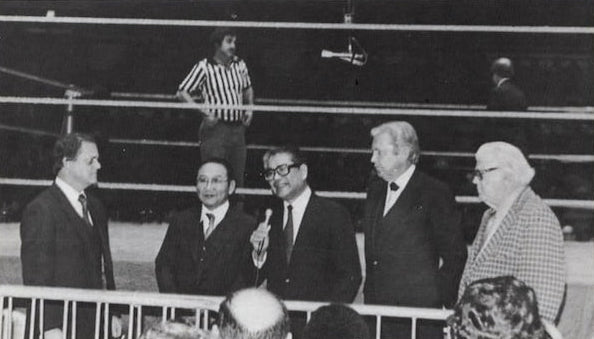
Madison Square Garden, January 1982: (L-R) Jim Crockett, Jr., Hiashi Shinma, Ken Tajima, Vince McMahon, and Frank Tunney. (Photograph by George Napolitano)

by Dick Bourne
Mid-Atlantic Gateway

It was quite the gathering of dignitaries during an intermission at the WWF wrestling event at New York's Madison Square Garden on January 18, 1982. The president of the WWF, Hisashi Shinma (second from the left) was making the announcement of the first annual I.W.G.P. (International Wrestling Grand Prix) Championship Tournament to be held in 1983 in Japan. Shinma, along with being the recognized president of the WWF was also a top official with New Japan Pro Wrestling (NJPW). 

Shinma was flanked by his interpreter Ken Tajima, and joined by National Wrestling Alliance (NWA) president and Mid-Atlantic Wrestling promoter Jim Crockett, Jr., WWWF promoter Vincent J. McMahon, and Toronto promoter (and NWA Vice President) Frank Tunney. It's also worth noting that Tunney and Crockett were business partners at this time, as Tunney was booking a majority of talent for his Maple Leaf Garden shows through Crockett's Charlotte, NC, office. 

It was a rare appearance for Crockett in Madison Square Garden. The WWF at this time was still a member of the NWA.

This gathering was captured by famed wrestling photographer George Napolitano who had the foresight to document the occasion. I've never seen any other photos from this rather historic gathering of wrestling dignitaries.

On the MSG Network broadcast of this show, the announcement was not covered. You could see this happening in the background of a wide camera shot, but announcer Vince (K.) McMahon was rambling on about something else while this was taking place. 

The 1/18/82 show was the first Madison Square Garden show I ever saw on TV. It was broadcast on delayed basis on the USA Network which had just been added to our local cable system in Kingsport, TN, where I grew up. The main event on that show was a really good WWF title defense by Bob Backlund against Adrian Adonis, where Adonis actually got the win, but not the title, when the match was stopped for blood. 

Mid-Atlantic stalwart Greg "The Hammer" Valentine was also on this show, defeating Pedro Morales, during one of Valentine's two big WWF stints during his 1976-1984 Mid-Atlantic period. Other regular Mid-Atlantic alumni on this card included former Mid-Atlantic champion Tony Atlas and perennial journeyman Charlie Fulton.   

According to the excellent reference book "Wrestling in the Garden: The Battle for New York" (by Scott Teal and J. Michael Kenyon, Crowbar Press), the show drew 18,301 and was simulcast live via closed circuit TV at the adjoining Felt Forum. While that book is an incredibly detailed compendium of all things related to the history of wrestling at Madison Square Garden, Teal and Kenyon oddly left out the gathering of these wrestling dignitaries at that January 18, 1982 show.

Thanks to Kyle Rosser for sending the photo clipping.

Originally published March 2021 on the Mid-Atlantic Gateway

Sunday, January 16, 2022

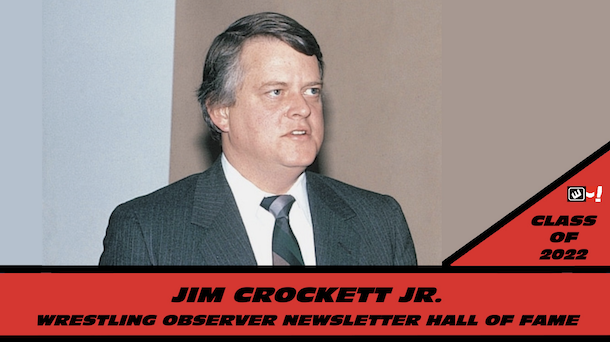
Jim Crockett Jr. in Wrestling Observer Hall of Fame

Happy to see that the Wrestling Observer Newsletter Hall of Fame inducted Jim Crockett Jr. into the Class of 2022.
Well deserved and long overdue.


Wednesday, March 24, 2021

A Brief History of Wrestling in the Mid-Atlantic Area

A Look Back at the Promoters and Television History of Jim Crockett Promotions
by Dick Bourne

Mid-Atlantic Gateway

Professional wrestling has been one of the most popular live events in the Carolinas and Virginia since the early/mid-1900s. Several key players were responsible for making pro wrestling an institution here, some familiar to fans, others perhaps not so familiar.

The company known for promoting wrestling across Virginia and the Carolinas for decades was Jim Crockett Promotions. Jim Crockett, Sr. started promoting wrestling in our area when he bought an old warehouse in Greensboro, NC, in December of 1933, named it the “Sportrena”, and held his first matches there. With that first card, the company that later grew to be known as Jim Crockett Promotions was born.

Crockett established his base of operations in Charlotte a year later in 1934, moving in on a chaotic promotional scene at that time. In 1939 he and successful Richmond promoter Bill Lewis bought out the interests of promoter Pete Moore who had been in partnership with Crockett for nearly 10 years going back to their days headquartered out of Bristol, VA. Moore’s promotional interests spanned the width and breadth of the area that we think of now as the Mid-Atlantic territory.  After buying Moore out, Lewis based his operations out of Richmond, and Crockett based his out of Charlotte. Together they brought top pro-wrestlers from around the country to the halls, armories, and small arenas throughout the Carolinas and Virginia.

As the companies evolved, Crockett had become the main promoter, with Lerwis booking all of his talent through the Crockett's Charlotte office. Lewis died in 1961, and Crockett sent Joe Murnick, his top lieutenant in Charlotte, to replace him. Murnick would headquarter out of Raleigh, but assumed all of Lewis's territoy to the east, including Fayetteville, Richmond, Hampton, and Norfolk and all points in between.

Over the years, Crockett had many local promoters like Murnick working for him within the various regions of the main territory including such men as Henry Marcus (central and lower South Carolina), Paul Winkhaus (Western North Carolina and Upstate South Carolina) and Pete Apostolou (Central and Southwest Virginia.). These promoters coordinated the local promotion of Crockett’s wrestling events. However, it was Murnick who became Crockett’s largest and most trusted partner.

In April of 1973, Jim Crockett, Sr. passed away and his son in law, John Ringley, took over the operations of the company. He was soon followed by Crockett's oldest son, Jim Crockett, Jr., who during his tenure expanded the reach of the company outside of the traditional territorial boundaries that had existed for years within the pro wrestling industry, and wound up being one of the two top players nationally. 

Crockett Jr.'s lieutenants included Joe Murnick and his sons Elliot and Carl, along with longtime wrestlers Sandy Scott, Johnny Weaver, and Gene Anderson, who transitioned to regional promoters at the ground level, working with and later slowly replacing those listed earlier.

The territory was always known within the business as the “Charlotte territory” because that is where the Crocketts were based. Until the mid-1970s, fans simply knew it as “All-Star Wrestling” or “Championship Wrestling.” Around the time of Jim Sr.’s passing, the promotion began to brand its wrestling business as “Mid-Atlantic Championship Wrestling”, which also became the name of their television program. Prior to this time, television wrestling had been taped out of multiple locations each week including Charlotte, High Point, Roanoke, and Raleigh. In 1974, the company consolidated its weekly television production to one location - - the studios of WRAL in Raleigh, NC. There had been many hosts of the local programs over the years including Nick Pond, Charlie Harville, Hal Grant, Bill Ward, and Bob Caudle. After the 1974 consolidation, Caudle became the main voice of the company, and would serve in that capacity until the company was sold to Ted Turner in 1988.

But it was from the WRAL studio that the magic we saw unfold each week on our TV screens originally took place. In 1975, Crockett Promotions added a second studio program eventually known as “World Wide Wrestling” which was hosted at different times by Ed Capral, Rich Landrum, David Crockett, and Tony Schiavone.

Eventually finding itself on the losing side of a wrestling war in the late-1980s, the 53-year old family business was sold to Ted Turner in late 1988. Turner had been a partner in Crockett's national expansion, enthusiastically providing four hours of weekly television on his nationally cable-cast Superstation WTBS out of Atlanta. This eventually included quarterly prime-time TV specials as well.

The syndicated "Mid-Atlantic Championship Wrestling" (later renamed "NWA Pro Wrestling") and "World Wide Wrestling", along with the national WTBS "World Championship Wrestling" battleship, drove hundreds of thousands of fans to the arenas each month. For a short time anyway, the once small Mid-Atlantic territory one of the largest and most successful wrestling promotions in the country.

This article was based on a shorter limited piece originally posted June 28, 2017 on the Mid-Atlantic Gateway.

http://www.midatlanticgateway.com/p/book-store.html

Tuesday, March 16, 2021

Cherish Those Around You: Conrad Thompson's Day with Jim Crockett, Jr. Inspires Tribute

Conrad Thompson recently posted his tribute to Jim Crockett, Jr. on Instagram. I thought it was beautiful, and hope he won't object to me posting a somewhat edited version here for historical purposes on the Gateway.

From Conrad:

Of all the things I’ve been lucky enough to do with regards to wrestling, interviewing Jim Crockett, Jr. this past December tops the list.

When we met with him in South Carolina he would only allow us to call him “Jimmy.” He was shocked that anyone even remembered him much less cared to talked to him. He told us he only remembered being recognized one time in the last 20 years, at a toll booth in Texas of all places. We were quick to remind him that while he may have left wresting behind thirty years ago, the impression he made upon us fans was both everlasting and undeniable. 

I don’t think it’s an exaggeration to say that beyond Vince, he was the most important promoter of our lifetimes. Had the cards fell a different way, who knows? But what an honor it was to spend the day with him, pick his brain, hear his stories, and enjoy lunch together. When we wrapped our shoot, we catered lunch and he acknowledged he didn’t really eat lunch but chicken parm was his favorite.

He couldn’t wait to talk about his family, how happy he was with the relationship he had with his siblings, how proud he was of his children and grandchildren, and how much he loved his wife. His wife Myra was his rock. He told us she was not only taking care of him but her father as well. He truly felt blessed to have her in his life. 

The way he ended our interview was poignant: cherish those around you. Jimmy did that. I hope he knows how much we cherished him and his contributions to what we all love so much. 

When we got the news Jimmy passed, we were just hours away from Tully Blanchard and J.J. Dillon appearing on a Turner station with the old JCP title belts in tow. (Thanks Dax Harwood and Cash Wheeler!) How special is it that it happened the very day Jimmy passed away?

He leaves behind an incredible legacy that we could never honor adequately. 

 - Conrad Thompson                          

Conrad's entire post, including an amazing tribute video produced by Kris MacDonald, featuring a song handpicked by Conrad, Dave Silva, and Mike Dockins, is here, below the jump...

Monday, March 08, 2021

Jim Crockett, Jr. Makes a Rare Appearance in Madison Square Garden (1982)

Madison Square Garden, January 1982: (L-R) Jim Crockett, Jr., Hiashi Shinma, Ken Tajima, Vince McMahon, and Frank Tunney. (Photograph by George Napolitano)

by Dick Bourne
Mid-Atlantic Gateway

It was quite the gathering of dignitaries during an intermission at the WWF wrestling event at New York's Madison Square Garden on January 18, 1982. The president of the WWF, Hisashi Shinma (second from the left) was making the announcement of the first annual I.W.G.P. (International Wrestling Grand Prix) Championship Tournament to be held in 1983 in Japan. Shinma, along with being the recognized president of the WWF was also a top official with New Japan Pro Wrestling (NJPW). 

Shinma was flanked by his interpreter Ken Tajima, and joined by National Wrestling Alliance (NWA) president and Mid-Atlantic Wrestling promoter Jim Crockett, Jr., WWWF promoter Vincent J. McMahon, and Toronto promoter (and NWA Vice President) Frank Tunney. It's also worth noting that Tunney and Crockett were business partners at this time, as Tunney was booking a majority of talent for his Maple Leaf Garden shows through Crockett's Charlotte, NC, office. 

It was a rare appearance for Crockett in Madison Square Garden. The WWF at this time was still a member of the NWA.

This gathering was captured by famed wrestling photographer George Napolitano who had the foresight to document the occasion. I've never seen any other photos from this rather historic gathering of wrestling dignitaries.

On the MSG Network broadcast of this show, the announcement was not covered. You could see this happening in the background of a wide camera shot, but announcer Vince (K.) McMahon was rambling on about something else while this was taking place. 

The 1/18/82 show was the first Madison Square Garden show I ever saw on TV. It was broadcast on delayed basis on the USA Network which had just been added to our local cable system in Kingsport, TN, where I grew up. The main event on that show was a really good WWF title defense by Bob Backlund against Adrian Adonis, where Adonis actually got the win, but not the title, when the match was stopped for blood. 

Mid-Atlantic stalwart Greg "The Hammer" Valentine was also on this show, defeating Pedro Morales, during one of Valentine's two big WWF stints during his 1976-1984 Mid-Atlantic period. Other regular Mid-Atlantic alumni on this card included former Mid-Atlantic champion Tony Atlas and perennial journeyman Charlie Fulton.   

According to the excellent reference book "Wrestling in the Garden: The Battle for New York" (by Scott Teal and J. Michael Kenyon, Crowbar Press), the show drew 18,301 and was simulcast live via closed circuit TV at the adjoining Felt Forum. While that book is an incredibly detailed compendium of all things related to the history of wrestling at Madison Square Garden, Teal and Kenyon oddly left out the gathering of these wrestling dignitaries at that January 18, 1982 show.

Thanks to Kyle Rosser for sending the photo clipping. Republished January 2022 on the mid-Atlantic Gateway.

Saturday, March 06, 2021

Jim Crockett, Jr. - The Guiding Force Behind Mid-Atlantic Championship Wrestling

by David Chappell
Mid-Atlantic Gateway


“Jim Crockett, Jr., the President of Jim Crockett Promotions” was a phrase that was not uttered often on Mid-Atlantic Championship Wrestling television programing. But when it was, everyone had that feeling that something momentous had happened, was happening or was about to happen. Much like the feeling I felt when learning of Jim Crockett’s recent passing.

The Captain of the Mid-Atlantic Championship Wrestling ship has left us, leaving us fans with yet another void in an ever-decreasing supply of our childhood wrestling heroes. But this passing is different from all the rest. Of all the iconic Mid-Atlantic Wrestling heroes that have predeceased Jim, as much as we loved each one of them, I think it is fair to say even if they had never appeared in the Mid-Atlantic area, we would have still had a memorable wrestling childhood. But without a Jim Crockett, Jr. the same could not be said.

In the title to this tribute, I chose the word “behind” for an important purpose. As a fan growing up, I knew of Jim Crockett’s importance due to his title of “President,” but even more so by the way his role was defined to the wrestling public on television. His real work was “behind” the scenes, but when he emerged from behind the curtain to address the Mid-Atlantic Wrestling television audience, that is where my special memories of Mr. Crockett endure. Not coincidentally, those are also my favorite memories of Mid-Atlantic Championship Wrestling as a whole. 

The first time I saw and heard Jim Crockett on Mid-Atlantic television was in 1974 when he would occasionally introduce the in-ring combatants for their TV bouts in the WRAL TV studios in Raleigh, North Carolina. That went on for a couple of years and while Mr. Crockett had a long list of talents, let us say that in-ring announcing was not at the top of that list. It was probably not an accident that around the same time Jim stopped doing TV ring introductions, he began appearing on-air in his role as “President.”

Jim Crockett would lend his on-air gravitas as the President of Jim Crockett Promotions to add legitimacy to issues and angles that the fans may have otherwise questioned but for his television appearances. In the fall of 1976, the Masked Superstar appeared on the scene and his manager Boris Malenko offered to put up $5,000 if anyone could defeat his charge by pinfall or submission. When Malenko raised questions on TV about the security of the money, Crockett assured Malenko, Superstar and the fans that the money would be placed in a savings and loan immediately where it could draw interest, and the bad guys would be given his personal receipt for the transfer of the funds. Those words from Crockett immediately put that issue to rest.

In the spring of 1977 when the Superstar came back from an alleged injury, the masked man was required to sign a contract on TV to face the Mighty Igor with Jim Crockett presiding over the contract signing. Prior to the signing, Crockett brought out newcomer Ricky Steamboat to tell the fans that the youngster was “leading by a landslide” in the early voting for the National Wrestling Alliance (NWA) Rookie of the Year award, giving further credence to Ricky’s ascension to main event status as he was beginning his Mid-Atlantic career. 

When the contract signing began, Malenko questioned Crockett that the contract did not specify when and where the match would be held. Crockett fired back, “I will decide when and where the Superstar will meet the Mighty Igor, not you.” Malenko responded, “You’re trying to railroad us; that’s exactly what you’re doing.” Crockett bluntly retorted, “Sign it or don’t wrestle, it’s that simple.” Not surprisingly, Superstar relented and signed the contract which continued that monster feud for most of the remainder of 1977.

Soon after that contract signing, Jim Crockett again appeared on camera in the WRAL TV studios when Ricky Steamboat knocked out Ric Flair after a series of prior incidents where Ric interrupted Steamboat’s television interviews. In the mayhem that followed this in the studio Crockett made it clear to the fans that Ric had it coming saying “[Flair] had been baiting and taunting Mr. Steamboat.” When a startled Blackjack Mulligan and announcer David Crockett hollered out that Steamboat had knocked Ric Flair out with one punch Jim Crockett emphatically backed that up with, “I have never seen that before!” This led to the TV bout between Steamboat and Flair the following week where Ricky won the Mid-Atlantic Television Title from Ric, and well, the rest is wresting history.

In early 1978 when Wahoo McDaniel was chasing Greg Valentine after the Mid-Atlantic Heavyweight Title after Valentine had earlier broken Wahoo’s leg, Jim Crockett briefly appeared on TV and told the fans that in a recent bout it appeared that Wahoo had won the Mid-Atlantic Title but due to the actions of a special referee the belt had been returned to Valentine. Greg then appeared on the set and publicly thanked Crockett for his actions, something that was almost unheard of for a “bad guy” to do, but anything Jim Crockett touched was instantly legitimized.

Skip ahead to the fall of 1980 when Blackjack Mulligan and “Bad Boy” Bobby Duncum were having a Texas feud for the ages that progressed to a “Taped Fist” match on television. The bout was off-the-charts wild, but only when Jim Crockett appeared on the set and ordered that the match be taken off TV because it was too brutal did this feud get elevated to another and higher level.

When we get to the middle of 1981, Greg Valentine and Sweet Ebony Diamond (Rocky Johnson) were battling over the NWA Television Title at the end of a tournament and were set to settle the issue in a televised championship bout on the Mid-Atlantic Championship Wrestling TV show. But the fans were told later during the program that Diamond was having transportation issues and could not appear for the bout. On the face of it, the explanation seemed a bit flimsy and Valentine demanded he be awarded the Title by forfeit. Jim Crockett appeared and vouched for Diamond’s issue trying to come into Raleigh from Canada and promised the fans the championship match would take place without fail the following week on TV. While Valentine was not overjoyed with Crockett’s ruling, he nevertheless accepted it and the match did take place as Crockett promised the next week.

When Jim Crockett began appearing in front of the camera sporadically, I also fondly remember those appearances that I would loosely categorize as “Jim Crockett, the authority figure.” In the fall of 1977 Paul Jones was on TV distraught as he recounted having his hair cut by the Masked Superstar in the Greensboro Coliseum. Jones desperately wanted revenge against the masked man for that heinous act. 

Jim Crockett appeared unexpectedly on the set and told Paul that he would take the necessary action to have the Superstar suspended for his acts. Jones pleaded with Crockett not to suspend Superstar, as doing that would not allow “Number One” to exact his revenge inside the squared circle. Crockett reconsidered on the spot, agreed with Paul, and vowed to get Jones a match with Superstar.

In the early spring of 1978 during the brief feud between Johnny Weaver and Baron von Raschke, the big German had gone after Johnny with a steel chair nearly striking the “Dean of Wrestling” and denting the chair on the ring post in the process. This prompted a visit from Jim Crockett on the set of the Mid-Atlantic Championship Wrestling TV show, with the President promising to recommend to the NWA Board of Directors the largest fine in their history. A spastic Raschke could only holler at the top of his lungs about being justified in his actions because he was being choked, but he and every wrestling fan knew who the man in charge was to deal with the aftermath of this regrettable incident.

During the very same time frame, Jim Crockett flexed his authority by telling the Mid-Atlantic fans that he, through the NWA Board, had stripped Ric Flair and Greg Valentine of the NWA World Tag Team Titles because of their no-showing for a match and leaving the ring on other occasions before a decision had been reached. Despite Flair and Valentine contending they only no showed because they missed their flight, Crockett maintained Ric and Greg were disrespecting the belts by ducking competition. This remedial action by Mr. Crockett would be brought up again and again in years to come, particularly when Flair and Valentine would subsequently team up.

1979 brought with it two of my favorite memories of Jim Crockett on Mid-Atlantic Championship Wrestling television. In early March of that year as part of World Wide Wrestling’s “Dream Match” series, Paul Jones had appeared to defeat former partner Ricky Steamboat for the United States Heavyweight Title. However, through the sharp eyes of guest commentator Johnny Weaver and the magic of instant replay, it was evident that Jones had pulled Steamboat’s tights to secure the pin. Referee Stu Schwartz tried to cajole Jones to physically pass the belt back to Steamboat, which “Number One” refused to do. That prompted an appearance from Mr. Crockett and with only a blunt “GIVE THE BELT BACK,” Paul reluctantly parted with his ill-gotten gains. 

In August of 1979, Jim Crockett had to enforce his authority in a way most of the fans probably did not care for. United States Heavyweight Champion Ric Flair had teamed with Blackjack Mulligan to capture the NWA World Tag Team Titles in the Greensboro Coliseum. Flair, flying high, then holding two major NWA titles was told by Crockett that he would have to relinquish one of those titles due to an NWA rule that prohibited any one wrestler from holding two major NWA titles simultaneously. Agonizing to make a decision on the spot, Flair handed the U.S. Title belt to Crockett and opted to keep the tag belts with his friend Blackjack. As difficult as that decision was for Ric, he took pains to tell the TV audience that he respected Mr. Crockett’s authority in enforcing the NWA’s rules.

Perhaps my favorite remembrances of Jim Crockett on television were when he came out to back up a ruling that had already been made by the President of the NWA. Even if there was a hint of a doubt about what the President of the NWA had done, it would pass muster with the Mid-Atlantic fans if Jim Crockett, Jr, put his seal of approval on it!

When the Masked Superstar was making his first appearance on Mid-Atlantic TV in September of 1976, with his cane-carrying manager Boris Malenko singing his praised to the hilt, that twosome was met with a surprise appearance from none other than Jim Crockett, Jr. Raining on the Superstar’s grand introduction to the Mid-Atlantic area, Mr. Crockett informed Malenko that NWA President Eddie Graham had ruled that he was prohibited from carrying a cane into a TV studio where wrestling matches were being held. The Superstar was livid at what he viewed as blatant disrespect for his manager and said that slight would drive him to herculean feats in the territory going forward.

But by far Jim Crockett’s most memorable TV moments for me while backing up the NWA President’s edicts involved Blackjack Mulligan and controversies over the United States Heavyweight Championship. In December of 1976 it appeared that Paul Jones and cleanly defeated Blackjack to regain the U.S. belt. However, Mulligan filed a protest over Jones’ win claiming that Paul’s feet were under the ropes when he pinned Blackjack, thereby invalidating Paul’s win and the title change.

A video tape was played for the Mid-Atlantic television viewing audience where NWA President Eddie Graham reluctantly agreed with Mulligan and invalidated Jones’ win on that highly technical ground. An incensed Jones was refusing to hand the belt back to Mulligan, and only did so when Jim Crockett reiterated that Graham’s decision was final, and that he had to physically hand over the belt to Mulligan.

Fast forward to July of 1977, and there was still controversy over the United States Heavyweight belt, and again Jim Crockett was brought into the middle of it. This time Blackjack Mulligan had been upset by Bobo Brazil for the U.S. Title, but Mully believed special referee George Scott had improperly grabbed his arm in the no disqualification match, allowing Brazil to get the advantage and head-butt him for the title-changing victory. Again, NWA President Eddie Graham sent a video tape announcing his decision, but this time the ruling went against Blackjack who went berserk at the adverse decision. The ever cool and collected Jim Crockett reaffirmed Eddie Graham’s decision for the fans at home telling them with a twinkle in his eye but in his typically understated fashion, “[Mulligan] expected a ruling in his favor, but it didn’t work out quite that way.”

When Jim Crockett himself became President of the NWA in 1980, to me it was a natural progression of taking his guidance and measured control over wresting in the Carolina’s and Virginia to a larger audience. The TV appearance that I remember most during his first tenure as NWA President was his last act in that capacity in the summer of 1982. Crockett announced his resignation as NWA President on Mid-Atlantic TV because then World Champion Ric Flair injured Wahoo McDaniel, and afterward Ric refused to wrestle Wahoo ever again. When the NWA Board would not back Crockett to fine or suspended Ric, and not require Ric to wrestle Wahoo again, Mr. Crockett stepped aside from that prestigious position. As always, Jim Crockett put the Mid-Atlantic Wrestling fans first above all else.

After Crockett’s resignation in 1982, the wrestling landscape began to rapidly change. In 1983 came Starrcade, and soon thereafter an expansion to where Mid-Atlantic Championship Wrestling became swallowed up into the larger NWA. Jim Crockett’s TV presence then came to be expected and was certainly noteworthy but was never as special to me as it was in those earlier days. 

My most enduring memories of Jim Crockett, Jr. will always be when the President of Jim Crockett Promotions and Mid-Atlantic Championship Wrestling came out from behind that curtain for a special TV appearance that always portended something momentous and often historic, giving us fans a glimpse of his guiding force over the wrestling promotion that we all loved so dearly. Just as his legacy for the fans of Mid-Atlantic Championship Wrestling was, and still is, momentous and historic. While you have now left us Jim Crockett, Jr., the wrestling memories you created and shared with us will never, ever die. Rest in peace, Mr. President.

Thursday, March 04, 2021

Jim Crockett, Jr. Passes Away

It is with great sadness that we learn of the passing of Jim Crockett, Jr. He died yesterday (March 3) at the age of 76. We wish to extend our sincere and heart felt condolences to his sister and brothers - - Frances, David, and Jackie Crockett, and to all members of the Crockett family.

Jim Crockett with Bob Caudle (1984)

David Chappell and I grew up loving Mid-Atlantic Wrestling from the mid-1970s, faithfully watching every Saturday on our local TV stations for the next 15 or so years. It was one of the highlights of each and every week. Much of what we saw and loved was the result of the tireless work of Jim Crockett, Jr., who headed up the Charlotte based promotional empire that his father started back in the 1930s. Alongside his siblings they ran one of the most successful companies in the history of the pro-wrestling business, growing it in the 1980s to become one of the two top promotional companies in the United States, and arguably producing the best in-ring product of any that survived that long when wrestling was consolidating from a regional business to a national business.

When we were kids, Jim Crockett was the man, the authority figure before it became fashionable. Quiet, straight-forward, methodical, he was always very low-key in his approach. But he was unmistakably the boss. And we knew as fans what Jim Crockett decreed was the law.  

We didn't understand anything about the actual wrestling business back then. We didn't know there were bookers and agents and producers involved in putting together the TV shows and the live arena events. We thought Jim Crockett did it all! When he brought guys into the territory that we didn't particularly care to see, we got mad at him. When he made those big main event matches pushing the guys we loved and wanted to see, he was a genius. He was our guy.

AdFreeShows.com

For many years after Ted Turner bought the family business, it appeared Jim Crockett had just disappeared. No one seemed to have information about where he was or what he was up to. We always wondered. It has been such a wonderful development for him to resurface for fans in recent years, first for the Crockett documentary produced by Michael Elliot for Highspots several years back, and most recently for his appearance at the huge Starrcast IV convention with his brother David in Baltimore, MD. And of course there is the current amazingly candid, hours-long conversation with Conrad Thompson as part of a series of streaming presentations on the Ad Free Shows / Patreon platform. It has been such a blessing on our life to be able to see and hear from him again after so many years. His family's company was important to us in so many ways, and the legacy of his work is still felt to this day. 

Thanks to George Pantas and Tony Schiavone for keeping us informed over the past days. Please joins us in sending prayers and condolences to the Crockett family. 

- Dick Bourne
Mid-Atlantic Gateway

Wrestling Observer  | PWInsider


Sunday, February 14, 2021

Jim Crockett, Jr. appears on Conversations with Conrad

Conrad Thompson has launched the second episode in his landmark series "Conversations with Conrad" as part of his Ad Free Shows platform on Patreon. The newest episode is part one of a conversation with the former president of Jim Crockett Promotions,  Jim Crockett, Jr.

Part One is approximately 2.5 hours covering an array of topics going back to his father Jim Crockett, Sr.'s earliest days in promoting wrestling in the 1930s to the family business exploding in the mid-1980s, and every possible thing in between. Part two, coming later will take it from there forward.

plus, as an added bonus, there is a huge "Easter egg" at the end of this episode featuring 8mm arena footage shot in Norfolk, Virginia in the early 1980s by George Pantas featuring Ric Flair, Wahoo McDaniel, Abdullah the Butcher, Roddy Piper, Jack Brisco, Sgt. Slaughter, Don Kernodle, Ricky Steamboat, Jay Youngblood and others. 

For more information on how you can become a patron of Ad Free Shows and enjoy the amazing amount of content there,  visit the Ad free Shows site on Patreon.com.

Thursday, February 20, 2020

Jim Crockett's North Carolina State Senate Run (1974)


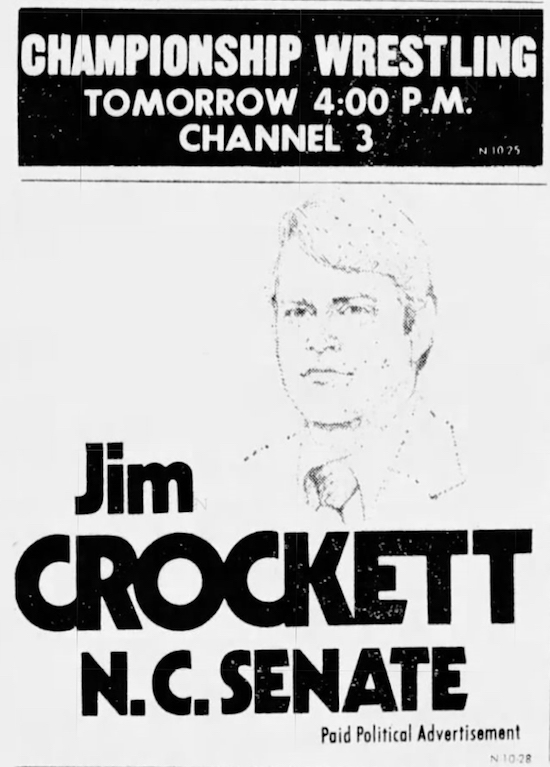
A reminder of the airtime for "Championship Wrestling" on WBTV channel 3 in Charlotte sits atop an ad for Jim Crockett Jr.'s unsuccessful North Carolina state senate campaign shortly before election day in November 1974.

Friday, January 10, 2020

End of the Road for the Mid-Atlantic Championship


by Dick Bourne
Mid-Atlantic Gateway

"We will let the fans know what the disposition of this title will be very soon."   - Jim Crockett, Jr., 12/27/86 
Those words still echo with me all these years later. I'm still waiting for someone to tell me what would become of my beloved Mid-Atlantic Heavyweight championship.

The sequence of images above from "World Championship Wrestling" on 12/27/86 show Ronnie Garvin handing over the Mid-Atlantic Heavyweight championship belt to Jim Crockett, Jr. in the studios of WTBS in Atlanta.

Garvin forfeited the title after he and Barry Windham had won the United States Tag Team championships. He is wearing the US Tag Team title belt. Jim Crockett told Ronnie he couldn't hold both titles, and he had to decide which one to forfeit.

"Well you know, it's a big disappointment to me ... it's a lot of work behind this belt and it represents the Mid-Atlantic area. And I don't mean no disrespect for it, because parting with this means a whole lot to me. But I don't want to disappoint my partner Barry Windham"   - Ronnie Garvin, 12/27/86

While Jim Crockett told Tony Schiavone that he would announce later what would be done with the title (we assumed a tournament), the belt and the championship were never seen or mentioned again.

Click to enlarge.
It was a sad day for long time fans of Mid-Atlantic Wrestling who had witnessed such great wrestlers hold that title including Danny Miller, Ole Anderson, Jerry Brisco, Johnny Valentine, Wahoo McDaniel, Ric Flair, Paul Jones, Jack Brisco, Roddy Piper, Greg Valentine, Ricky Steamboat, Ray Stevens, and so many others. 

Earlier that same year, the name of the flagship syndicated program for Jim Crockett Promotions was changed from "Mid-Atlantic Championship Wrestling" to "NWA Pro Wrestling." With that name change and the disappearance of the championship, the great era known as "Mid-Atlantic Championship Wrestling" had quietly come to an end.

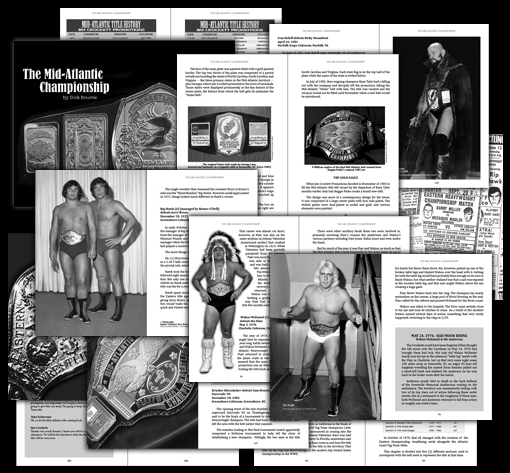
For more on the origin and history of the Mid-Atlantic championship, check out our book "Mid-Atlantic Championship," a detailed title history with over 50 photographs of the champions and the belts, as well as dozens of newspaper clippings.And the story of each and every title change, over 60 of them in a period of 13 years.

This story was originally published May 12, 2018 on the Mid-Atlantic Gateway.


http://www.midatlanticgateway.com/p/origins-of-mid-atlantic-title.html

Thursday, December 05, 2019

Three Part Interview with David Crockett on Norfolk's "The Flagship"

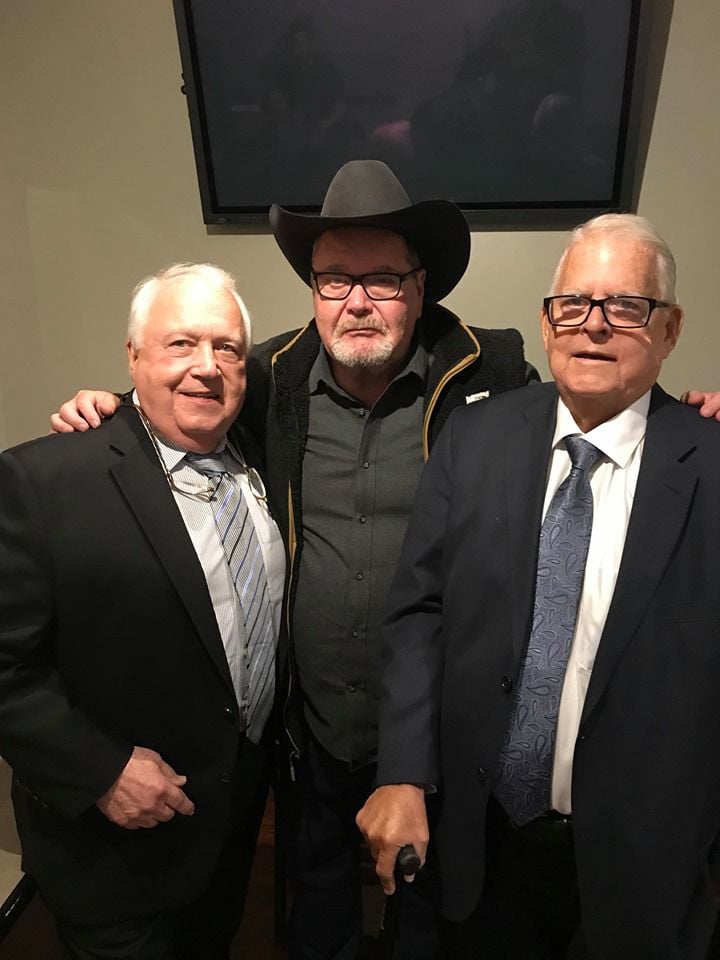
David Crockett, Jim Ross, and Jim
Crockett, Jr. at the Starrcast IV convention
in Baltimore MD (Nov 2019)
George Pantas conducted a recent interview with David Crockett in advance of November's huge Starrcast convention in Baltimore, MD. He then followed up with David, his older brother Jim Crockett, Jr., and Bruce Mitchell of Pro Wrestling Torch, who moderated the panel with the Crocketts at Starrcast.

The interviews appeared in three parts in The Flagship, an online newspaper site for the military in Norfolk, VA.

We posted a link to the Part 1 on the Gateway back before Starrcast, but part 2 and 3 followed later after that event.

Here are links to all three parts, and a lot of ground is covered, from family to Jim Crockett Promotions and WCW.


Part One
Wrestling legend David Crockett talks Starrcast IV and more

Part Two
Starrcast IV Memories
Interview with Jim Crockett, David Crockett, and Bruce Mitchell

Part Three
Wrestling legend David Crockett, past part-owner of Jim Crockett Promotions tells all.
Continuing conversation with David Crockett

Wednesday, October 23, 2019

Jim and David Crockett to appear on Starrcast panel hosted by Tony Schiavone

https://www.starrcast.com/

Starrcast IV, Baltimore MD
Friday, November 8, 2019
7:00pm - 8:00pm
Ram's Head Live!


Jim Crockett Promotions took the war to Vince McMahon in the 1980s and its legacy remains mighty in the hearts and souls of diehard professional wrestling fans. Tony Schiavone, who went from fan to one of the voices of JCP, sits down with Jim and David Crockett, who publicly discuss, for the first time ever, the highs and lows and legacy of their family, their battle to keep the flame of true pro wrestling lit and the promotion that defined greatness for many, many decades. A Starrcast exclusive like no other!!

Taking place on the Pro Wrestling Tees stage at Ram's Head Live Friday night, November 8, at 7 PM. Available to stream live & on demand on FITE.TV. 

Information from the Starrcast schedule page. Visit the Starrcast website for more details.

Sunday, January 27, 2019

Jim Crockett, Jr. and Bill Watts at the Crockett Cup (1986)


by Dick Bourne
Mid-Atlantic Gateway

My friend Rob Riddick once told me that one of his favorite trips was to New Orleans in April of 1986 for the inaugural Jim Crockett Sr. Memorial Cup tag team tournament. George Napolitano, through the assistance of Tony Schiavone in the Crockett office, made it possible for him to get credentials.

Ironically, it would be an event where he wasn't allowed to shoot many of the matches, since they limited the number of photographers that could shoot ringside, and those would be the guys like Napolitano, Bill Apter, and the photographers from Japan. But what made the trip so memorable for him was that he was able to get this shot.

Rob told me he was walking through one of the long hallways in the Super Dome before the evening session and noticed Jim Crockett and Bill Watts having a conversation in front of a set where they had the Crockett Cup trophy on display in front of a huge board with the tournament brackets. He worked up the nerve to interrupt them and asked them could he get a picture, sensing the rare opportunity to get them together in such a setting. Watts told him, "I don't have my jacket with me." Rob assured him that wasn't a problem in the slightest.

Without being asked, the two reached up and each held the trophy for the photograph which Rob told me was one of his all-time favorites given these two giants in wrestling together for that rather historic show.


THE CROCKETT CUP RETURNS
This April the National Wrestling Alliance, in conjunction with the Crockett Foundation and Ring of Honor Wrestling, will bring back the Jim Crockett Sr. Memorial Cup Tag Team Tournament. The original event, promoted by Jim Crockett Promotions in the 1980s, only lasted three years, from 1986-1988. The company was sold to Ted Turner late in 1988.

When Jim Crockett, Jr. announced that the NWA had selected New Orleans to host the inaugural tournament in 1986, he told fans that it was his dream to host the tournament in the home city of Crockett Promotions, Charlotte, NC. Mr. Crockett never got to fulfill that dream, but the modern day NWA is about to come close for him.

The 2019 tournament will be held in Concord, NC, just outside Charlotte, at Cabarrus Arena. The venue has been host to several ROH events over the last few years. We'll be following news of the Crockett Cup closely and look forward to seeing that event return to the landscape of pro-wrestling.

Follow the NWA on Twitter at @NWA.

http://bookstore.midatlanticgateway.com

Thursday, December 27, 2018

Mid-Atlantic Myths: Eastern States Championship Wrestling

by Dick Bourne
Mid-Atlantic Gateway

A recent YouTube video on the history of Jim Crockett Promotions (Mid-Atlantic Championship Wrestling: The Untold Story) asserts that the promotion was known as "Eastern States Championship Wrestling" prior to the rebranding to "Mid-Atlantic Championship Wrestling." This is not the case, but if you Google the phrase "Eastern States Championship Wrestling", you'll find a dozen or so pro-wrestling references, all oddly similar, that mention this was the early branding identity of Jim Crockett Promotions.

Eastern States Champion Rip Hawk
There was an Eastern States Championship in the
1970s, but the territory was never known as
"Eastern States Championship Wrestling"

* * *
This appears to be a modern-day Internet/Wikipedia phenomenon, and sadly it has become one the most common misconceptions among fans about the history of the company. To our knowledge, neither the territory nor the company were ever known (officially or otherwise) as "Eastern States Championship Wrestling."

One of the reasons I bring this up is because our website is credited in the documentary as a general source for information used in the video, and I wanted to document here that we are not the source for this misconception.

It's not exactly clear where this myth got started, although some of the earliest independent references I could find through Internet searches trace to this early 2000s post on the Kayfabe Memories website (quoted almost word for word in the YouTube documentary): "The history of Mid-Atlantic Championship Wrestling goes all the way back to 1935 when Jim Crockett Sr. started promoting in the Carolina and Virginia areas....The area was known at the time as Eastern States Championship Wrestling." (-KayfabeMemories.com)

First let me say that Kayfabe Memories is a wonderful website with an amazing collection of memories and stories written by many knowledgeable people about the territory days of pro-wrestling. But in an age of "cut-and-paste" internet journalism, some things that are simple honest errors or misunderstandings get copied to other sources (like Wikipedia and fan websites) and before you know it there are lots of references to things that are untrue that spread throughout the Internet that people begin to accept as fact. The idea that Jim Crockett Promotions called itself "Eastern States Championship Wrestling" is a great example of this.


MISTAKES HAPPEN
Now I'm the last person to throw stones at someone making an error, especially when it comes to the largely undocumented world of pro-wrestling history. I've made plenty of honest errors myself when writing about wrestling. And I always try to own up to them and get them corrected as soon as possible. But this Eastern States myth is one that has bothered me for awhile because there is really no basis for it. The only possible thing I can speculate on that might have resulted in this misconception is the existence of the company's Eastern States Heavyweight championship in the early 1970s, but that only existed for three and a half years (1970-1973). How that got misunderstood as going back in the 1930s is beyond me.

Prior to the switch in branding to "Mid-Atlantic" which began as early as 1972, there was no specific name for the promotion publicly. It was usually referred to as "Championship Wrestling" or "All-Star Wrestling" in newspaper ads and on event posters, which were the names of the TV programs when they were launched in the late 1950s. Prior to that, ads and posters simply promoted "Wrestling". The local promoters partnering with JCP were independent contractors up until the 1970s and they occasionally used other regional names to promote shows in their ads, but there was no broader company name until 1972-1973 when the branding for Mid-Atlantic Wrestling began.


MORE MYTHS
Other popular misconceptions included alongside this Eastern States myth are that
(1) Jim Crockett, Jr. took over the company after his father retired, and that
(2) he subsequently named it Mid-Atlantic Championship Wrestling.

Jim Crockett, Sr. never really retired. He died on April 1, 1973 while still fully in charge of the company. The person he was grooming to take over the family business was his son-in-law John Ringley. Not long after Crockett, Sr.'s death, Ringley left the company after a separation from his wife Frances (Jim Sr.'s daughter), and that's when his oldest son Jim, Jr. took over.

The branding name "Mid-Atlantic Championship Wrestling" was actually conceived of by John Ringley in the early 1970s, suggested to Jim Crockett, Sr. as both men were riding in a car together on Morehead Street in Charlotte. Ringley remembers it clearly, as related to the Mid-Atlantic Gateway in my conversation with him in 2016. (David Crockett confirmed this in the 2013 Michael Elliot documentary for Highspots.com "Jim Crockett Promotions: The Good Old Days.") Ringley wanted to brand their company to the public, moving away from the generic "All Star Wrestling" or "Championship Wrestling" names that were used by them and many other promotions for the TV shows and live events for decades. Jim Sr. approved of the idea, and the name "Mid-Atlantic Championship Wrestling" started showing up in newspaper ads as early as March of 1972, more than a year before Jim Crockett, Sr.'s death. The TV show's name was changed when TV production was consolidated to one location in 1973.

Whatever way the story of "Eastern States Championship Wrestling" got started, I felt the need to set it straight, at least as best we know it. We always welcome further information that helps fill in gaps or provides further detail on the rich history of Mid-Atlantic Wrestling and Jim Crockett Promotions, and we appreciate anyone and everyone who endeavors to keep the history of Mid-Atlantic Wrestling alive.

Thanks to Carroll Hall for his assistance with this article.


http://bookstore.midatlanticgateway.com

Sunday, July 22, 2018

The Betrayal of Chief Wahoo McDaniel (Part Three)

FINAL IN A THREE PART SERIES
by Dick Bourne
Mid-Atlantic Gateway

Between 1981 and 1984, the NWA took the U.S. title from Wahoo McDaniel on three separate occasions, leading Wahoo (understandably) to believe that the NWA was out to get him in some way. In each of those three cases (storyline, of course), it looked to us like Wahoo was treated unfairly.

Check out the previous two parts of this series:
PART ONE (Betrayal #1 - - The Roddy Piper Conspiracy)
PART TWO (Betrayal #2 - - The Sgt. Slaughter Conspiracy) 

Now, two years removed from the largely forgotten 1981 and 1982 incidences, it was about to happen for the third time. And this time, Wahoo had had enough.

PART THREE: 
THE FINAL BETRAYAL

Through the 1970s and up through early 1984, Wahoo McDaniel had been one of the most popular and inspirational wrestlers ever in Mid-Atlantic Championship Wrestling. He had endured endless slugfests with Johnny Valentine, 90-minute time limit matches with the Andersons, 40 stitches over his eye from a broken table leg from Ric Flair, and a  broken leg from Greg Valentine. He had held the Mid-Atlantic title, the World tag team titles, and finally had captured the prestigious stepping stone to the NWA World title in the form of the United States Heavyweight Championship.

Wahoo McDaniel is introduced by Bob Caudle as
the new United States Heavyweight Champion
___________________________________________
But in 1981 and 1982, the NWA had twice taken the U.S. title from Wahoo over technicalities in NWA rules that were clearly exploited by the very wrestlers who wanted to take the title from him. Wahoo wasn't losing the title in the ring; he was losing it as a result of legislation handed down from the NWA.

In 1984, it happened for a third time, and this time it was more than Wahoo could stand. This time Wahoo fought back. And because it involved a dispute he had with Ricky Steamboat, the area's most popular wrestler at that time, fans ultimately turned on Wahoo as a result.

So all these years later, here is our close look at the unthinkable: Wahoo McDaniel became one of the most hated wrestlers in Jim Crockett Promotions in 1984.

* * *


"When you see a man down, cover him. That was the first thing I was taught when I started wrestling." - Wahoo McDaniel

In the spring of 1984, Wahoo McDaniel was itching to get back into the NWA World Title picture. To put things in context of the times, he had returned full time to the Mid-Atlantic area in the fall  of 1983 after spending the majority of the year in the AWA. He joined a small group of wrestlers who helped Ric Flair prepare for his World title match with Harley Race at Starrcade '83. After Flair was successful in regaining his championship, Wahoo assumed that perhaps Flair might give him a shot at that one title that had eluded him his entire career.

But Flair was tied up in other challengers when he came through the Mid-Atlantic area with the title in early 1984, primarily Dick Slater, who had defeated Greg Valentine for the United States title which made him the number one contender.

Then in April, Ricky Steamboat was coaxed out of retirement by promoter Jim Crockett to challenge Flair for the NWA title as part of a huge show in Greensboro called "Boogie Jam '84." Steamboat had retired after Starrcade '83 to open up a gym in Charlotte. But he had the itch to get in the ring again and a deal was made for him to return. He and Flair wrestled to a classic 60-minute draw that night. Flair, wrestling as a "babyface" in the Mid-Atlantic territory in those years (a "heel" everywhere else) had escaped the challenge of his best friend Steamboat. Wahoo, also a friend of Flair's, felt it was now his turn and was waiting in the wings after Steamboat had failed to take the ten pounds of gold.

However, Steamboat found a way to stay in the primary title picture. He defeated Dick Slater in April to become the United States Champion and number one contender. When Flair would defend in the Mid-Atlantic territory, he continued to face Steamboat while Wahoo continued to be looked over.

Wahoo thought he had missed his opportunity all together when Flair lost the title briefly to Kerry Von Erich in May. But Flair soon had the title back and Wahoo thought he might finally get his chance. But when Flair returned to the Mid-Atlantic area in early June he defended against everyone but Wahoo McDaniel.

Dick Slater got another title match. Tully Blanchard, the NWA TV champion, had a shot at the belt, too. Steamboat received more chances based on his holding the U.S. title and being classified as the top contender. Even former World champion Harley Race came into the Mid-Atlantic area to challenge Flair for the gold in Raleigh and Richmond.

But Wahoo continued to be overlooked.


THE U.S. TITLE STRATEGY
So Wahoo developed a new strategy. He would issue a challenge to his friend Ricky Steamboat for the United States Championship. If Steamboat would accept and he could defeat Steamboat for that title, it would mean that Wahoo would now be the number one contender and Flair would have to face him for the belt.

Steamboat accepted Wahoo's challenge, and Wahoo started chirping on TV interviews how Steamboat was not scared to give him a title shot at the U.S. belt, but Flair seemed to be afraid to give him a World title shot. At least, this is the way it looked to the Chief.

This raised the eyebrows of many fans. Wahoo even praised the hated Tully Blanchard for giving him shots at Blanchard's TV title, a feud which had escalated in recent weeks, and would wind up playing a pivotal role in the upcoming Wahoo/Steamboat title match.

On June 24, 1984, Wahoo met Ricky Steamboat in Greensboro for the United States Championship. Fans were particularly interested in the match because it was a battle of two "fan favorites" and they wondered who might lose their cool first in such a contest. Wahoo's recent rhetoric led many to believe it would likely be him. He made it clear in several interviews: "I will do anything it takes to win that title."

The match was stiff but clean for the most part with neither man able to gain much of an advantage. In the closing moments, however, Ricky Steamboat inadvertently collided with referee Sonny Fargo after a tackle from McDaniel, knocking Fargo momentarily senseless. While the referee was down, Wahoo's adversary Tully Blanchard showed up at ringside, grabbed a steel chair, entered the ring and tried to blast Wahoo with it. But the Chief saw it coming, ducked, and Blanchard hit Steamboat instead, knocking him out cold.


Wahoo, however, didn't see Steamboat get hit with the chair. All he knew was that he had ducked the chair shot. He went after Blanchard with a big chop, chasing him from the ring. When Wahoo turned around, there was Steamboat still out cold on the mat. Wahoo assumed it was from the earlier tackle and immediately covered him and a revived referee Sonny Fargo counted three.

Wahoo McDaniel had just won the United States title for a fourth time, and now finally would be recognized as number one contender and get his shot at Flair's NWA World title.

Or so he thought.


BLACK SATURDAY
What happened next would be the final straw in Wahoo's ongoing disagreements with the NWA that had started in 1981.

The NWA reviewed the film of the match in Greensboro and decided to hold up the championship due to the interference of Tully Blanchard. Yes, the NWA had taken the title from Wahoo yet again.

That announcement was made on TV on 7/14/84. It was Wahoo's own personal 'Black Saturday'. That same day was ironically the same date that the WWF took over Georgia's NWA TV time on Superstation WTBS. Georgia would survive that tragedy and eventually get the NWA back. But Wahoo's personal 'Black Saturday' would drive him over the cliff. And if you look at it with an open mind, you can understand why.

What was particularly unusual about the NWA's action was that no party had filed an appeal to the NWA. Steamboat had not, and while he voiced frustration and disbelief over Wahoo covering him after the chairshot form Blanchard, he accepted the NWA's decision because he ultimately felt it would give him the best chance to get the title back.

So why had the NWA gotten involved in the first place? Later in that same show, Wahoo got his answer.

David Crockett reported on the 7/14/84 show that his brother Jimmy Crockett had taken the film of the match to NWA President Bob Geigel in Kansas City for his further review. While fans probably saw no problem in that since they thought Steamboat got the raw end of the deal in the match, it probably appeared to Wahoo at this point that not only was the NWA out to get him, but now his own guy Jim Crockett had joined that effort, too! Wahoo's paranoia was running wild.
 
David Crockett would also report on TV that Geigel found the whole matter so controversial that he was calling a full board meeting to review the matter and determine who the rightful champion should be.

So if you're Wahoo McDaniel, you have to be thinking, "OK, they didn't call a full board meeting when Piper paid Abdullah to attack me in 1981 which cost me the title on a contractual matter, and they didn't call a full board meeting when Slaughter intentionally injured me in 1982 to force me to miss a title defense that cost me the title due to a temporary NWA rule. But now they hold up the title and call a full board meeting to review a film where I clearly didn't do anything wrong? All because, what - - their fair-haired boy Ricky Steamboat lost his belt?"

Host Bob Caudle is shocked when Jim Crockett tells him Wahoo McDaniel
might not be allowed to enter the U.S. title tournament.

One more little straw to throw on the camel's back: a week later, Jim Crockett speculated to Bob Caudle that the NWA might not decide on a rightful champion at all. They might decide to put the title up in a tournament and - - incredibly - - Wahoo might not be allowed to enter it! The subtle implication was that Crockett and the NWA thought Wahoo might have been in cahoots with Blanchard to hit Steamboat with a chair to begin with. 

Needless to say, Wahoo wasn't happy. I don't know about you, but I'm sort of feeling Wahoo's frustration and paranoia right along with him.

For their part, most fans were taking Steamboat's side in things and thought Wahoo had taken advantage of the situation where Blanchard had hit Steamboat with the chair. But Wahoo disagreed. He asserted that he had no idea that Blanchard had hit Steamboat with the chair. And if you watch the film closely, you can clearly see he is telling the truth. Wahoo didn't see it, he just turned and saw Steamboat flat on his back.


"He was going to hit me. I dodged out of the way, and then he came to hit me again, I knocked him out of the ring. And the first thing they ever teach you, Caudle, is that if somebody's down, you cover them. I thought Steamboat was down from the tackle, I covered him. I don't have any reason to be ashamed. I thought the man was down from the tackle, and I still believed it until I saw the film. But like I told Steamboat up front, I was gonna beat him any way I could, and I did. The NWA and Jimmy Crockett is behind this, Steamboat's behind it, to hold that U.S. belt up on me."  - Wahoo McDaniel, after being informed that the NWA had held up the United States title.

Wahoo had already tested fan's patience with his attitude towards their favorite Ric Flair, despite the fact that Wahoo had a valid point on not getting an NWA title match from Flair. They were unhappy now with the way Wahoo had taken advantage of a bad situation for their other favorite Ricky Steamboat, despite the fact Wahoo had valid point there, too. With the latest actions of the NWA Wahoo was very bitter, and letting everyone know it.


A WALK ON THE DARK SIDE
What was worse  - - the NWA's betrayal or the fan's betrayal? Regardless, it drove Wahoo to the dark side. He found a sympathetic ear in Tully Blanchard, and the two formed a tag team, calling themselves "the Awesome Twosome." That development led to tag team main events against such unlikely allies as Ric Flair and Dusty Rhodes. Flair even recruited longtime friend Blackjack Mulligan to come back from Florida and help him battle the "Awesome Twosome." Wahoo would  speculate further that the tag matches were a way for Flair to continue to duck him in NWA title matches.

http://www.midatlanticgateway.com/p/us-title-book.html
Available on Amazon.com
and the Mid-Atlantic Gateway

___________________________
Those next months saw what would have been unthinkable only a few short months ago: Wahoo McDaniel had become one of the most hated wrestlers in Jim Crockett Promotions.

In the end, though, Wahoo had the last laugh and found his personal redemption. The NWA did indeed decided to put the U.S. title up in a 16-man tournament that October, and though he had to fight his way through every level of it, he came out the winner and was U.S. champion once again.

Wahoo was on a rampage with the belt, determined to pay back the NWA and fans for what he saw as them turning their backs on him. He brutalized his opponents, and had no trouble fending off title challenges from Manny Fernandez and Superstar Billy Graham, among others.

In March of 1985, however, he ran into a challenge he couldn't overcome and lost the title to Magnum T.A. in the match that got Magnum over as a superstar in the Mid-Atlantic area. Wahoo left the territory for Florida and became a fan favorite once again. He was able to patch things up with Flair, Magnum, and others and came back to the area in the fall of 1985 to team with Dusty Rhodes in Rhodes' battles with Andersons. The fans were on Wahoo's side once again.

However, Wahoo always had an edge to him after that. I don't think he ever got over what he saw as a betrayal by the NWA in 1984. And if you are completely honest with yourself and look at that whole situation objectively, you would have to admit - - Wahoo always had a point. It was hard to argue with his logic in explaining his actions as a result of the final great betrayal.

Looking back on it, it was one of the great stories told in the year 1984, and one of the memorable chapters in the long and storied career of the great Chief Wahoo McDaniel.

* * * * * * * * *

 "1984 is a heavily maligned year for JCP/Mid-Atlantic, which occasionally suffered due to the bumps of a regime change and roster upheaval. But one thing that never wavered (rather it was further galvanized) was the believability and pure awesomeness that was Chief Wahoo McDaniel."  - Mike Sempervive, Wrestling Observer Live (@sempervive)


http://horsemen.midatlanticgateway.com

Saturday, May 12, 2018

A Sad Day for the Mid-Atlantic Heavyweight Championship


by Dick Bourne
Mid-Atlantic Gateway

"We will let the fans know what the disposition of this title will be very soon."   - Jim Crockett, Jr., 12/27/86 
Those words still echo with me all these years later. I'm still waiting for someone to tell me what would become of my beloved Mid-Atlantic Heavyweight championship.

The sequence of images above from "World Championship Wrestling" on 12/27/86 show Ronnie Garvin handing over the Mid-Atlantic Heavyweight championship belt to Jim Crockett, Jr. in the studios of WTBS in Atlanta.

Garvin forfeited the title after he and Barry Windham had won the United States Tag Team championships. He is wearing the US Tag Team title belt. Jim Crockett told Ronnie he couldn't hold both titles, and he had to decide which one to forfeit.

"Well you know, it's a big disappointment to me ... it's a lot of work behind this belt and it represents the Mid-Atlantic area. And I don't mean no disrespect for it, because parting with this means a whole lot to me. But I don't want to disappoint my partner Barry Windham"   - Ronnie Garvin, 12/27/86

While Jim Crockett told Tony Schiavone that he would announce later what would be done with the title (we assumed a tournament), the belt and the championship were never seen or mentioned again.

It was a sad day for long time fans of Mid-Atlantic Wrestling who had witnessed such great wrestlers hold that title including Danny Miller, Ole Anderson, Jerry Brisco, Johnny Valentine, Wahoo McDaniel, Ric Flair, Paul Jones, Jack Brisco, Roddy Piper, Greg Valentine, Ricky Steamboat, Ray Stevens, and so many others. 

Earlier that same year, the name of the flagship syndicated program for Jim Crockett Promotions was changed from "Mid-Atlantic Championship Wrestling" to "NWA Pro Wrestling." With that name change and the disappearance of the championship, the great era known as "Mid-Atlantic Championship Wrestling" had quietly come to an end.

For more on the origin and history of the Mid-Atlantic championship, visit this page:

The Origin and Evolution of the Mid-Atlantic Heavyweight Championship
http://www.midatlanticgateway.com/p/origins-of-mid-atlantic-title.html

Republished January 10, 2020 on the Mid-Atlantic Gateway.

http://horsemen.midatlanticgateway.com